1 in 5
Women experience noticeable ovulation pain every cycle
Day 14
Typical onset — but it can be anyday from day 10–20
< 48h
How long it lasts for the vast majority of women
In this article
- What is mittelschmerz?
- The pain intensity scale
- 3 biological causes explained
- Which side — and why it switches
- When in your cycle it happens
- Ovulation pain vs appendicitis vs cysts
- 8 relief methods — ranked by speed
- Using pain to track your fertile window
- Warning signs that need a doctor
- Frequently asked questions
Every month, one of your ovaries swells, ruptures, and releases a single egg into the fallopian tube. For roughly one in five women, this biological event is felt — sometimes as a brief sharp jab, sometimes as a dull ache that lingers for a day or two. It is entirely normal, and in many cases it is actually a useful fertility signal. Here is everything you need to know.
What Is Mittelschmerz?
Mittelschmerz (pronounced MIT-el-shmerts) is the German medical term for ovulation pain. Literally translated it means "middle pain" — a reference to its timing in the middle of the menstrual cycle, which is also the middle of life between menstrual periods.
It is classified as a functional pain — meaning it is caused by normal physiological processes, not disease or injury. The pain is real and can range from a barely-noticed twinge to a sharp cramp that momentarily doubles you over, but in the vast majority of cases it resolves within hours and leaves no lasting effects.
Quick fact: Ovulation pain was first formally described by German physicians in the 19th century who noticed that many women reported a consistent one-sided lower abdominal pain midway through each cycle — completely separate from their periods.
The Ovulation Pain Intensity Scale
Ovulation pain sits on a wide spectrum. Most women fall in the mild-to-moderate zone — noticeable but manageable. The gradient below shows where different experiences land.
Pain intensity — from barely noticeable to severe
None
No pain felt
Mild
Twinge, easily ignored
Moderate
Ache, noticeable
Severe
Investigate further
80% notice nothing
Brief twinge only
Dull ache, 1–4 hrs
Cramping, up to 24h
Severe — see a doctor
3 Biological Causes of Ovulation Pain
There is not a single cause — ovulation pain is the combined result of three overlapping physiological events, all happening within a window of a few hours.
Which Side — and Why It Switches
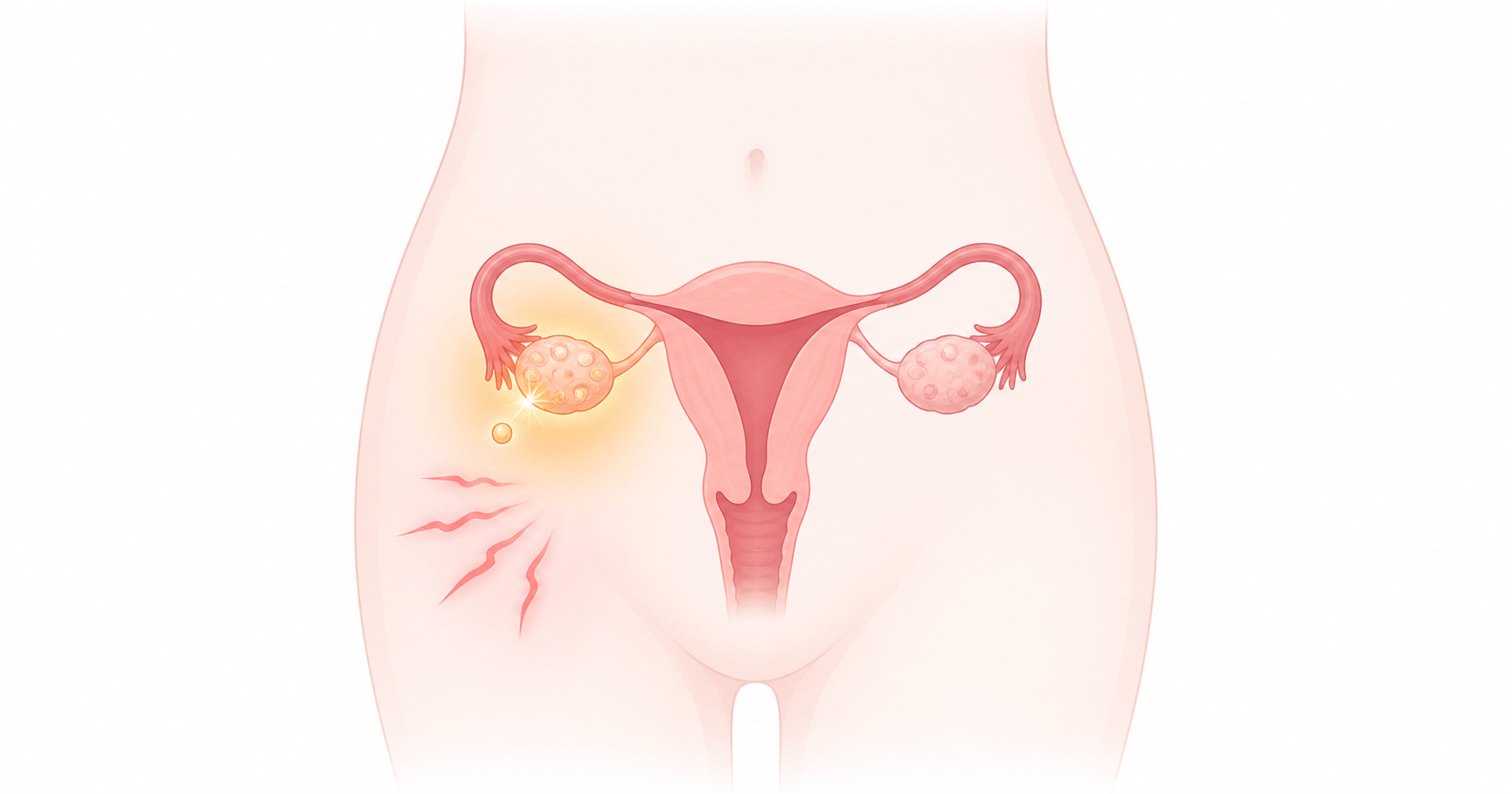
Ovulation pain is almost always one-sided because only one ovary releases an egg per cycle. The pain you feel is on whichever side is ovulating that month.
🔴
Left Ovary
Ovulating this cycle — pain felt on the left side of the lower abdomen
Active this cycle
🫀
Uterus
⚪
Right Ovary
Resting this cycle — will likely ovulate next cycle
The alternation is not perfectly predictable — some women find one ovary dominates for several months in a row. If you consistently feel pain on only one side every cycle and it is increasing in severity, that pattern is worth discussing with a doctor (a persistent cyst on one ovary can explain it).
Other symptoms that often appear together
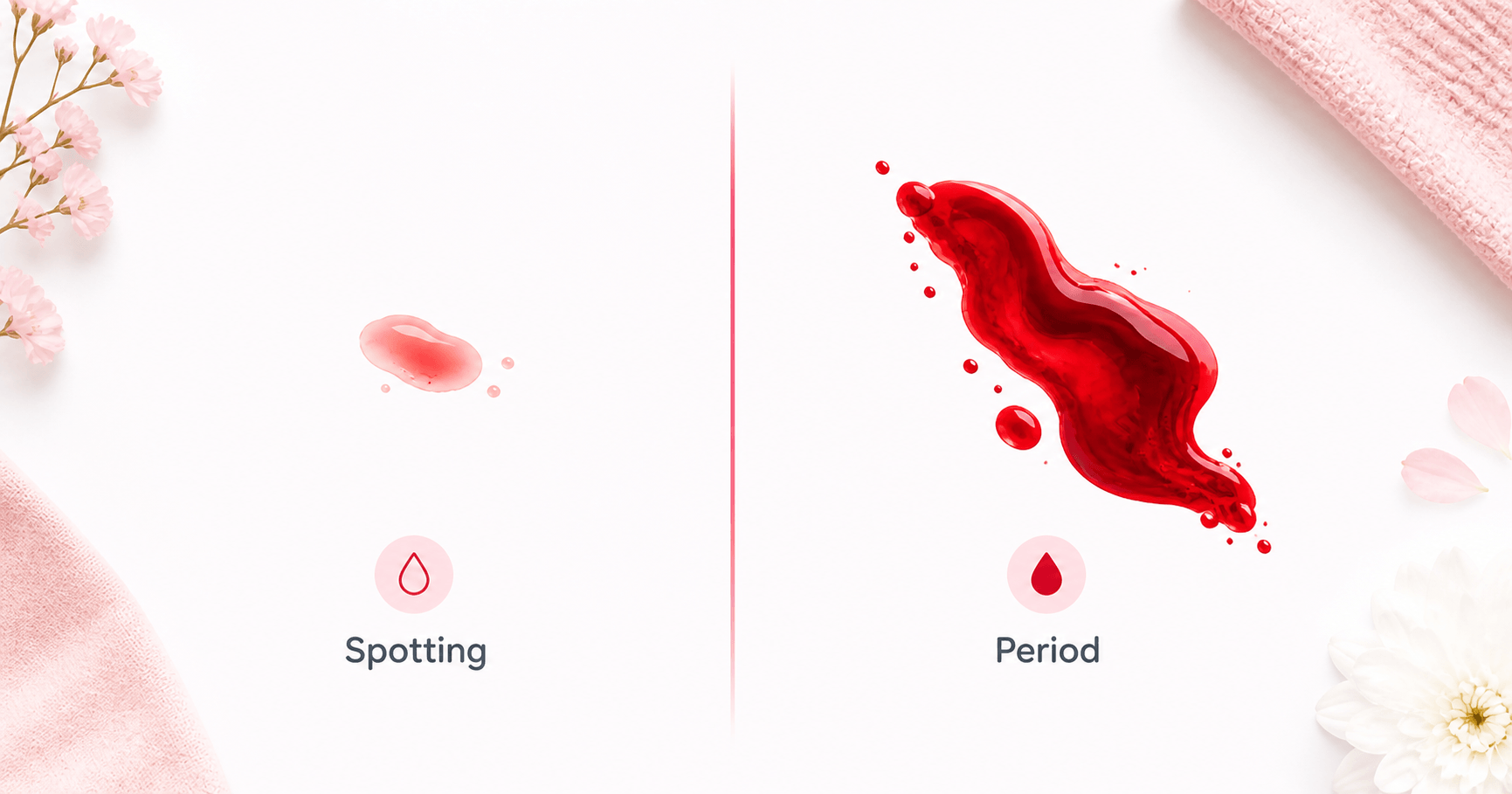
- A small amount of light pink or brown spotting — from the ruptured follicle, harmless and usually just a spot on underwear
- Increased cervical mucus — egg-white consistency, stretchy and clear, peaks right at ovulation
- Mild bloating — fluid shifts and LH-related water retention
- Heightened libido — a built-in biological signal that this is your most fertile time
- Breast tenderness — rising progesterone begins immediately after ovulation
Where Ovulation Pain Sits in Your Cycle
In a textbook 28-day cycle, ovulation occurs around day 14. In reality, cycle length varies enormously, and ovulation can occur anywhere between day 10 and day 20 — or even later in long cycles.
Your 28-day cycle — where mittelschmerz fits
Days 10–13 — Follicle grows rapidly
Dominant follicle swells from ~10mm to 18–24mm; you may notice pressure or a low-level ache building on one side.
Day 14 (±4 days) — Mittelschmerz strikes
LH surges, follicle ruptures, egg is released. The characteristic sharp pain or cramp occurs here — lasts minutes to hours.
Days 14–16 — Dull ache phase
Follicular fluid is reabsorbed by the peritoneum. The sharp pain eases into a lingering dull ache that fades as fluid clears.
Day 17+ — Corpus luteum forms, pain gone
The empty follicle becomes the corpus luteum and begins producing progesterone. Mittelschmerz pain is completely resolved by this point.
Ovulation Pain vs Other Causes of Pelvic Pain
The most important clinical distinction is between mittelschmerz and appendicitis — both cause right-sided lower abdominal pain and can initially feel similar. The table below maps out the key differences.
Feature
Mittelschmerz
Appendicitis
Ovarian Cyst
Endometriosis
Side
Left or right, alternates
Right only (McBurney's point)
Either side
Both or central
Onset
Gradual — builds over hours
Rapid — worsens over 6–12h
Sudden if ruptured
Cyclical, worsens over months
Duration
Minutes to 48 hours
Progressive — does not resolve
Days to weeks
3–7 days around period
Fever
None
Common, rising
Sometimes (if infected)
Rarely
Nausea / vomiting
Rare, mild
Common and worsening
If severe
Common around period
Timing in cycle
Mid-cycle only
Any time
Any time
Pre-period / menstrual
Resolves on its own
Yes, always
No — needs surgery
Often, but not always
Partial — recurs monthly
Appendicitis red flag: If your right-sided pain is intensifying over several hours rather than easing, if you have a temperature above 38°C, or if the pain moves from the navel to the lower right and you feel nauseous — go to the emergency room. Do not wait to see if it resolves like usual ovulation pain.
8 Relief Methods — Ranked by Speed
Most ovulation pain responds well to simple self-care. Here are the most effective approaches, ordered from fastest-acting to longer-term support.
Heat therapy
A heating pad or hot water bottle on the lower abdomen relaxes smooth muscle, reduces cramping, and increases local blood flow. 15–20 minutes gives noticeable relief for most women.
Works in 10–15 minIbuprofen (NSAIDs)
Ibuprofen 400mg blocks prostaglandins — the chemicals driving the uterine and ovarian muscle contractions. Take with food at the first sign of pain for best effect. Naproxen sodium works similarly.
Works in 20–30 minLight movement
Gentle walking stimulates circulation and reduces the peritoneal irritation caused by follicular fluid. Avoid intense exercise, which can aggravate the pain during the acute phase.
Works in 20–40 minHydration
Staying well-hydrated helps the body reabsorb the follicular fluid faster and reduces bloating-related discomfort. Aim for 2–2.5 litres of water on the day the pain occurs.
Supports recoveryGentle yoga poses
Child's pose, supine twist, and cat-cow stretches release tension in the hip flexors and pelvic floor muscles that tighten in response to ovarian pain. Hold each for 30–60 seconds.
Works in 15–30 minWarm bath or shower
Full-body warmth from a bath provides broader relaxation than a localised heat pad — helpful when pain is more diffuse or accompanied by pelvic heaviness. Add Epsom salts for enhanced muscle relaxation.
Works in 15–25 minMagnesium supplementation
Magnesium glycinate (200–400mg daily) taken throughout the cycle reduces smooth muscle reactivity. Women who supplement consistently often report milder ovulation and period pain over 2–3 months of use.
Long-term supportRest and positioning
Lying on the side opposite to the pain with a pillow between your knees reduces traction on pelvic ligaments. If pain is bilateral, lying on your back with knees bent and a pillow under them works best.
Immediate comfortUsing Ovulation Pain to Track Your Fertile Window
Mittelschmerz is one of the body's natural ovulation signals — and when used alongside other methods, it can be a genuinely useful fertility tracking tool.
The timing problem
The critical issue is when the pain arrives relative to when the egg is released. The pain can begin up to 12–24 hours before ovulation (as the follicle swells) or after ovulation (as fluid irritates the peritoneum). You cannot tell from the pain alone whether the egg has just been released or is about to be.
This matters because a released egg survives only 12–24 hours, while sperm can survive in the reproductive tract for up to 5 days. The highest-fertility window is therefore the 2–3 days before ovulation — not the day of.
Best approach: Use LH predictor strips starting 4–5 days before your expected ovulation day. The LH surge typically peaks 24–36 hours before the egg is released — giving you advance notice. When you then feel mittelschmerz, you know ovulation has just occurred or is occurring. Together these two signals bracket your fertile window with precision.
Tracking pain in a cycle app
Logging your mittelschmerz in Wamiga each cycle builds a personal pattern over 2–3 months. The app can predict which side you're likely to ovulate on and flag your fertility window days earlier — combining your pain data with cycle length patterns for a smarter prediction.
Warning Signs That Need a Doctor
Ovulation pain is benign — but certain patterns or accompanying symptoms signal that something else may be going on. See your GP or go to urgent care if you experience any of these:
Fever above 38°C
Any pelvic pain combined with a temperature suggests infection — pelvic inflammatory disease or a ruptured infected cyst — and needs same-day evaluation.
Pain lasting more than 3 days
Normal mittelschmerz resolves within 48 hours. Ongoing pain beyond 3 days suggests a haemorrhagic cyst or other pathology — get an ultrasound.
Pain that gets progressively worse
Mittelschmerz eases over time; it does not escalate. Pain that intensifies hour by hour is the hallmark of appendicitis or ovarian torsion — both surgical emergencies.
Vomiting or inability to eat
Severe nausea and vomiting alongside pelvic pain is not typical of ovulation — it points to appendicitis, ovarian torsion, or a ruptured cyst with significant internal bleeding.
Pain mid-cycle every single month, worsening over time
Endometriosis can masquerade as severe ovulation pain. If your mid-cycle pain has become significantly worse year over year, get a gynaecology referral.
Positive pregnancy test + pelvic pain
Any pelvic pain in early pregnancy — especially one-sided — must be assessed urgently to rule out ectopic pregnancy, which is life-threatening without treatment.
Frequently Asked Questions
What does ovulation pain feel like?
It typically starts as a brief sharp or stabbing sensation on one side of the lower abdomen, then settles into a dull ache or cramp. Some women describe it as a "popping" feeling followed by a general heaviness on that side. Mild bloating, light spotting, and increased clear discharge often appear at the same time.
How long does ovulation pain last?
For most women it lasts anywhere from a few minutes to a few hours. In about 20% of women it can persist up to 24–48 hours. If it extends beyond 3 days it is no longer typical mittelschmerz and should be evaluated.
Which side does ovulation pain occur on?
One side only — whichever ovary is releasing the egg that cycle. It typically alternates sides month to month, though not always perfectly. Consistent pain on the same side every cycle can indicate a persistent cyst on one ovary and is worth investigating.
Can I use ovulation pain to track my fertile window?
Yes, but the pain marks the moment of ovulation (or just after) — not the start of the fertile window, which begins 4–5 days earlier. Pair awareness of mittelschmerz with LH test strips for the most accurate fertile window identification.
Is ovulation pain a sign of a problem?
In most cases, no. Occasional mid-cycle pain is a normal physiological event. However, pain that is severe, worsening over time, lasting more than 3 days, or accompanied by fever, vomiting, or heavy bleeding should be evaluated to rule out endometriosis, ovarian cysts, or other conditions.
Does ovulation pain mean I'm ovulating normally?
Feeling mittelschmerz is a strong signal that you ovulated — the physical process of follicle rupture is happening. However, the absence of pain does not mean you are not ovulating. The majority of women who ovulate regularly feel no pain at all. LH strips and cycle tracking remain the most reliable ways to confirm ovulation.
Sources & Further Reading
The guidance in this article is informed by reputable medical and public-health organizations: