Can You Have a Period While Pregnant?
No — but bleeding during pregnancy is common. Here's what it means.
A few drops of pink blood, a day before your period is due — is it spotting, or the start of your period, or something else entirely? This guide gives you a clear framework to know exactly what you're looking at, every time.
In this article
The confusion is understandable — both involve vaginal bleeding, both can be red or pinkish, and both can arrive around the same time in your cycle. But spotting and a period are fundamentally different events produced by different mechanisms. Once you understand the distinction, you'll be able to read your body's signals with confidence.
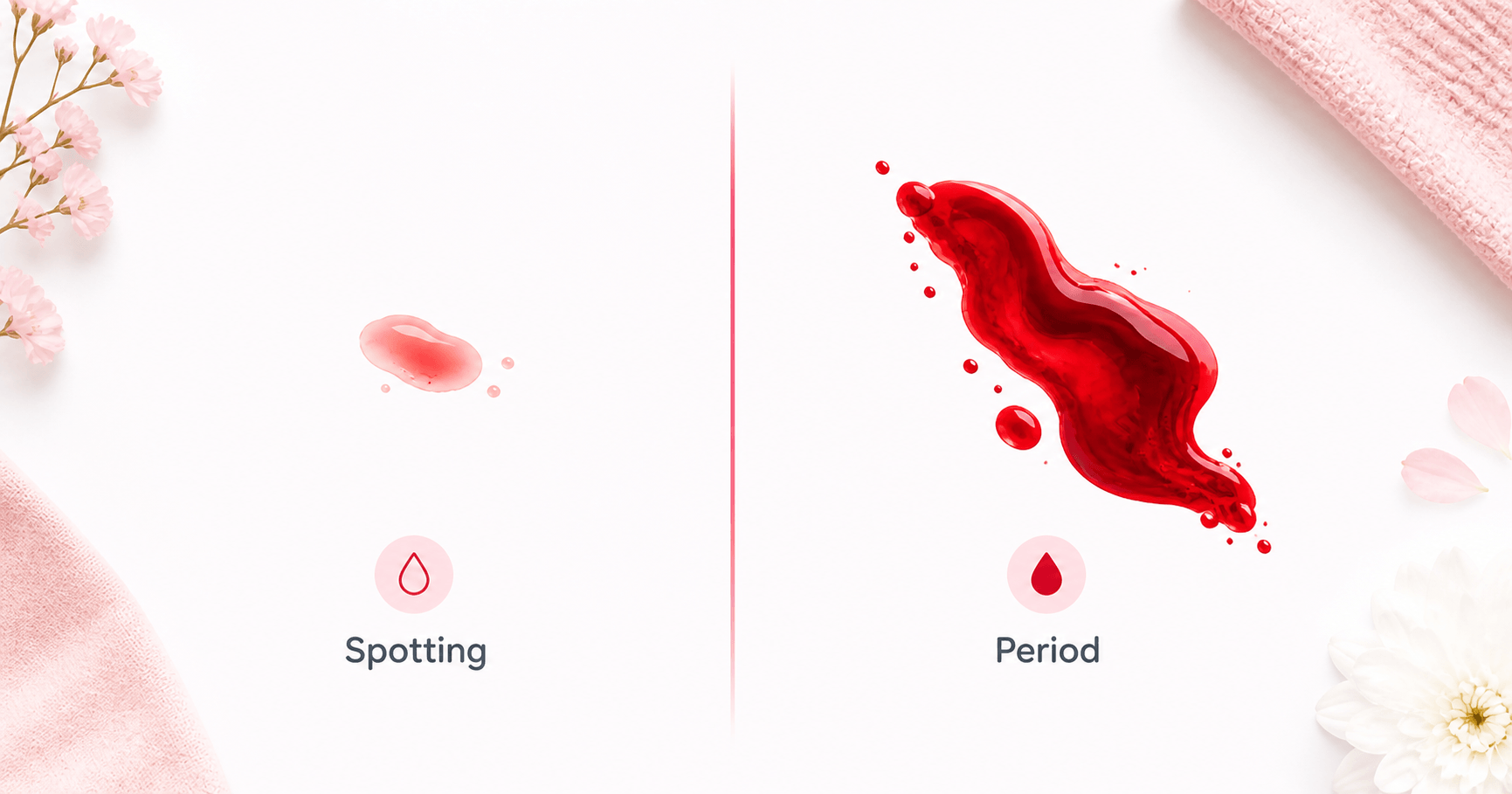
A period (menstruation) is the scheduled shedding of the uterine lining after an ovulatory cycle. It is driven by a drop in progesterone at the end of the luteal phase. It is predictable, cyclical, and heavy enough to require sanitary protection.
Spotting is any light vaginal bleeding that occurs outside of, or at the very edges of, a menstrual period. It comes from various sources — the cervix, a breaking follicle, a small vessel irritated by an embryo implanting, or hormonal fluctuations — and it is not the structured shedding of the uterine lining. It appears as a few drops or streaks of blood and does not require a pad or tampon.
The single most useful way to distinguish spotting from bleeding is to place what you're seeing on this scale. Spotting lives in the first third — period bleeding occupies the rest.
If what you're seeing fits entirely in the first band (dots, streaks, no flow) — it's spotting, not a period, regardless of colour.
Run through these seven characteristics. If most columns align in the spotting column, it's almost certainly not your period.
The clot rule is absolute. If you see even a small blood clot, it is not spotting — it is your period (or heavier bleeding that needs evaluation). Spotting never produces clots because it doesn't involve the coordinated shedding of uterine tissue.
The timing of spotting within your cycle is the most powerful diagnostic clue. The same light pink bleed means something completely different on day 8 vs day 22.
Light brown discharge or spotting after your period ends. Usually old blood finishing its exit — normal if it clears within 2 days.
A small estrogen drop at ovulation triggers light pink spotting in ~15% of women. Lasts 12–48 hours. A very reliable ovulation signal when it occurs consistently.
If conception occurred, the embryo implants 6–12 days post-ovulation. Results in very light pink or brown spotting for 1–3 days. Often mistaken for an early, light period.
As progesterone drops before menstruation, light brown or pink spotting appears 1–2 days before the full flow. Common and usually normal if it lasts fewer than 3 days.
Spotting has many possible causes. Here they are ranked by how commonly they produce mid-cycle or abnormal spotting, with what to look out for:
Log spotting separately from your period
Wamiga lets you log spotting, flow level, colour, and cycle day — so you can see patterns your doctor will actually find useful.
Download Wamiga Free →Most spotting is harmless. These situations are the exceptions:
Any bleeding after 12 consecutive period-free months must be evaluated — every time, no exceptions. It is not normal and requires same-week assessment.
The combination — especially one-sided — could indicate ectopic pregnancy, cyst rupture, or pelvic inflammatory disease.
Occasional cervical sensitivity is fine. Repeated bleeding after every intercourse needs a cervical exam to rule out ectropion, polyp, or cervical abnormality.
Consistently long pre-period spotting suggests a luteal phase defect — a progesterone issue that can affect fertility and is treatable.
Points toward an infection (STI or BV). Don't wait — untreated pelvic infections can affect fertility.
By definition, anything requiring a liner or pad is no longer spotting. Evaluate as unexplained mid-cycle bleeding.
Spotting is very light vaginal bleeding — a few drops or streaks — that does not require a sanitary product. A period is the cyclical shedding of the uterine lining, lasts 3–7 days, requires a pad or tampon, and is accompanied by more significant flow. The clot rule is definitive: if you see clots, it's not spotting.
Yes, which is why confusion is so common. The most reliable separating factors are: spotting does not require a sanitary product, lasts under 2 days, produces no clots, causes little to no cramping, and doesn't build and taper like a period. A very light period that fits all those criteria is more likely spotting.
Light brown or pink spotting 1–2 days before your period is common and usually reflects falling progesterone as the cycle ends. It becomes worth investigating if it lasts 3+ days before the period, is bright red, or occurs consistently every cycle — as this can signal a luteal phase defect or endometriosis.
Implantation spotting is characteristically light pink or brown, involves only a tiny amount of blood (dots rather than flow), lasts 1–3 days, occurs around days 20–24 of a 28-day cycle, and causes no cramping. A pregnancy test 1–2 days after the spotting ends gives an accurate result.
See a doctor if spotting requires a pad, comes with pelvic pain, happens after sex repeatedly, is post-menopausal, appears with unusual discharge or odour, or lasts 3+ days before your period every cycle. Post-menopausal bleeding — even a single episode — requires same-week evaluation without exception.
The guidance in this article is informed by reputable medical and public-health organizations:
No — but bleeding during pregnancy is common. Here's what it means.
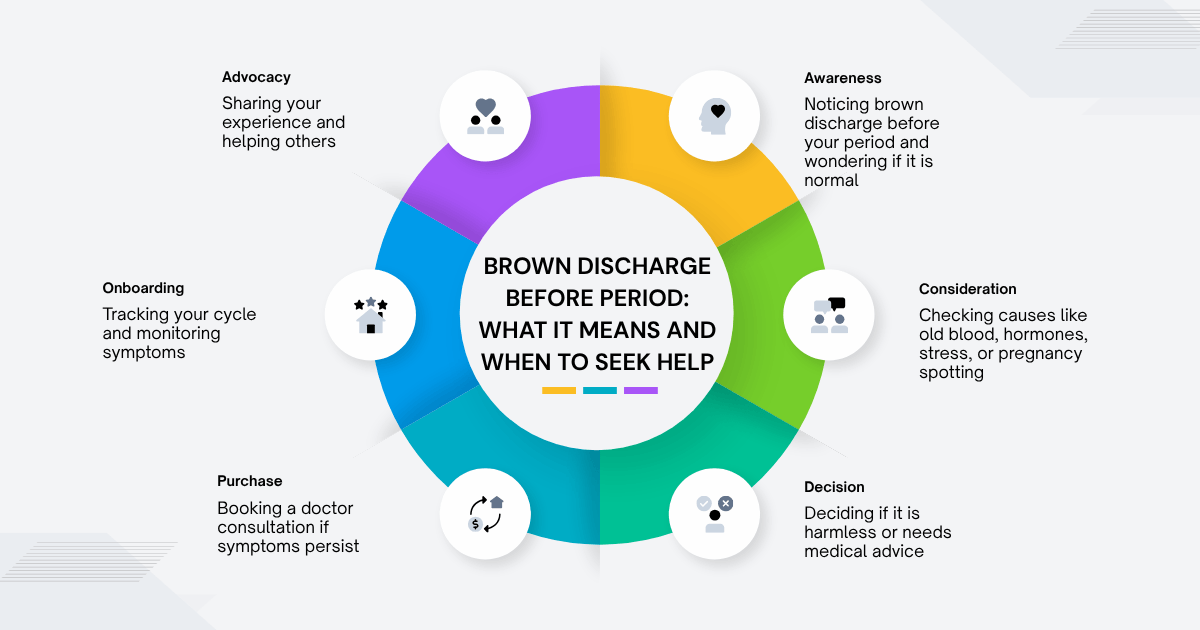
When old blood is harmless — and when it isn't.
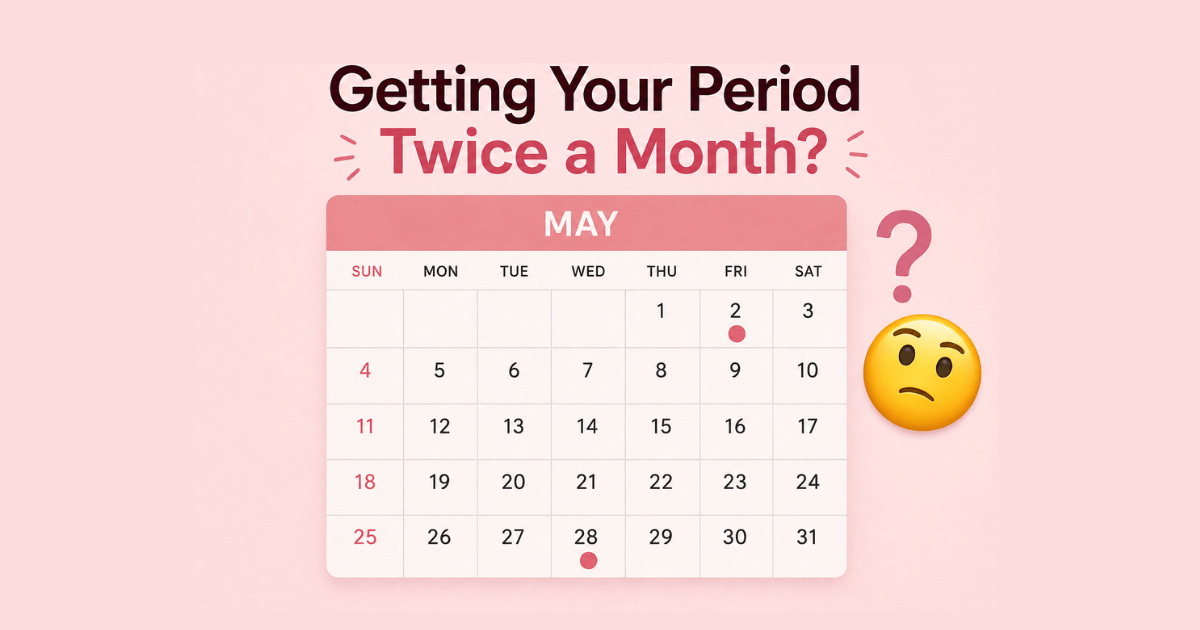
What counts as irregular — and what's actually behind it?