Signs Your Period Is Coming: 12 Early Warnings
PMS vs pregnancy symptoms — how to tell them apart.
Short answer: no. But about 1 in 4 pregnant women bleed in early pregnancy — and it can look exactly like a period. Here's what that bleeding actually is, how to tell it apart, and which signs mean go to the ER right now.
In this article
It's one of the most Googled questions in women's health — and the confusion is completely understandable. You see blood, your brain says "period," but something feels different. Or you had what looked like a light period and only found out weeks later that you were pregnant the whole time. Here is the full picture.
A menstrual period is the shedding of the uterine lining after an unfertilised cycle. During pregnancy, a fertilised egg implants into that lining, and the hormone hCG keeps progesterone levels high — which prevents the lining from shedding. Physically, the lining cannot release while sustaining a pregnancy. What you may be experiencing is a different kind of bleeding entirely.
Here is the hormonal chain that makes a period impossible during pregnancy:
So when a pregnant woman bleeds, it is always coming from a source other than normal endometrial shedding. Understanding those sources is the key to knowing whether the bleeding is harmless or needs immediate attention.
The most common confusion is between implantation bleeding and a period. Implantation bleeding happens when the fertilised egg physically burrows into the uterine wall — tiny blood vessels rupture and a small amount of blood is released. It occurs around 6–12 days after conception, which puts it close to when your period is due — making it easy to mistake one for the other.
Not sure which it was? Take a pregnancy test 1–2 days after the bleed ends. Modern home tests detect hCG reliably from the first day of a missed period — or even earlier if implantation has occurred. A positive result confirms the bleed was pregnancy-related, not a period.
Implantation bleeding is just one of several reasons a pregnant woman may bleed. Causes differ by trimester — here's the full breakdown, from common and harmless to rare and serious.
Occurs in ~25–30% of pregnancies as the embryo implants. Light spotting lasting 1–3 days. No treatment needed — it resolves on its own.
A pool of blood collecting between the placenta and uterine wall. Found in 1–3% of pregnancies on early ultrasound. Ranges from light spotting to heavier bleeding. Most resolve on their own; large hematomas require monitoring.
Pregnancy dramatically increases blood flow to the cervix. The cervical cells become fragile and may bleed after sex, a pelvic exam, or even without provocation. The blood comes from the cervix surface, not the uterus. Harmless.
Bleeding with or without cramping in the first trimester that doesn't progress to a complete miscarriage. About 50% of women who experience this go on to deliver healthy babies. An ultrasound confirming fetal heartbeat is reassuring.
Affects ~10–20% of known pregnancies. Typically presents as heavy bleeding, significant cramping, and passing of tissue. Most miscarriages occur in the first 12 weeks. Medical evaluation confirms and guides next steps.
The embryo implants outside the uterus — usually in the fallopian tube. Presents with light to moderate vaginal bleeding plus one-sided pelvic pain. If the tube ruptures, internal bleeding can be life-threatening within hours. A home test is positive but an ultrasound will not find a uterine pregnancy.
Benign growths or an area of cervical cells that are more prone to bleeding. Often cause spotting after sex. An internal exam confirms and reassures.
The placenta partially or fully covers the cervix. Often detected at the 20-week anatomy scan. Many cases resolve as the uterus grows. Painless bright red bleeding is the hallmark sign when it doesn't resolve.
As the cervix begins to dilate before labour, the mucus plug — which may be tinged pink or red — is expelled. This is completely normal and expected in the final weeks. Labour may begin within hours to days.
The placenta separates from the uterine wall before delivery. Presents as sudden heavy bleeding with severe abdominal pain and uterine rigidity. This is a medical emergency for both mother and baby.
The colour and consistency of pregnancy bleeding carries meaningful information. While only a doctor can confirm the cause, this quick guide helps frame what you're seeing:
Most commonly implantation bleeding or cervical irritation. Usually harmless if there's no pain and it lasts fewer than 3 days.
Old blood — it took time to exit the uterus or vagina. Often seen at the tail end of implantation bleeding or from a resolving subchorionic hematoma. Generally less concerning than fresh red blood.
Active, fresh bleeding. Small amounts after sex may be cervical. Heavy bright-red bleeding — especially with cramping — needs immediate medical evaluation.
Can indicate a miscarriage in progress or a significant bleed. Passing tissue or clots alongside heavy dark-red bleeding warrants urgent care.
Passing grey or whitish tissue is a sign of miscarriage. Go to the emergency department. Save the tissue in a clean container if possible — it helps doctors confirm the diagnosis.
Track your cycle and spot early signs
Log your cycle patterns, spotting days, and symptoms. Wamiga helps you notice what's different — before your next appointment.
Download Wamiga Free →Most early pregnancy bleeding is not an emergency. But certain combinations of symptoms require urgent care — sometimes within minutes.
Any trimester. This level of blood loss needs immediate assessment regardless of other symptoms.
The hallmark of ectopic pregnancy. Do not wait — a ruptured ectopic tube is life-threatening.
Signs of internal bleeding (ruptured ectopic). Shoulder pain from blood irritating the diaphragm is a key red flag.
Go to the ER and bring the tissue if possible. It helps confirm miscarriage and rules out ectopic or molar pregnancy.
Together these may indicate a septic miscarriage or intrauterine infection — both are medical emergencies.
After 28 weeks, all vaginal bleeding — even light spotting — should be evaluated the same day. Placenta previa and abruption are both possible.
No. A true menstrual period requires the shedding of the uterine lining — which cannot happen while an embryo is implanted there. The hormone hCG, produced by the developing embryo, keeps progesterone high and prevents the lining from shedding for the entire pregnancy. Any bleeding during pregnancy comes from a different source entirely.
Implantation bleeding occurs when the fertilised egg burrows into the uterine wall, around 6–12 days after conception. It shows up as light pink, red, or brown spotting lasting 1–3 days. It is significantly lighter than a period, never produces clots, and causes little to no cramping. A pregnancy test taken a day or two afterward will be accurate.
Key differences: implantation bleeding is lighter (spotting vs flow), shorter (1–3 days vs 3–7), pinkish or brownish rather than bright red, has no clots, and causes minimal cramping. It also tends to arrive a few days earlier than your expected period. If you're unsure, take a pregnancy test after the bleed ends.
No. About 25% of all pregnant women bleed in the first trimester, and roughly half of them go on to have completely healthy pregnancies. The most common causes — implantation bleeding, cervical sensitivity, and subchorionic hematoma — are benign. However, heavy bleeding with cramping or passing tissue does need same-day medical evaluation.
Go to the ER immediately for: heavy bleeding soaking a pad in under an hour, one-sided pelvic pain combined with bleeding (possible ectopic), shoulder tip pain or dizziness (internal bleeding), passing of tissue, fever combined with bleeding, or any bleeding after 28 weeks of pregnancy.
The guidance in this article is informed by reputable medical and public-health organizations:
PMS vs pregnancy symptoms — how to tell them apart.
Negative test, no period — here's what's actually going on.
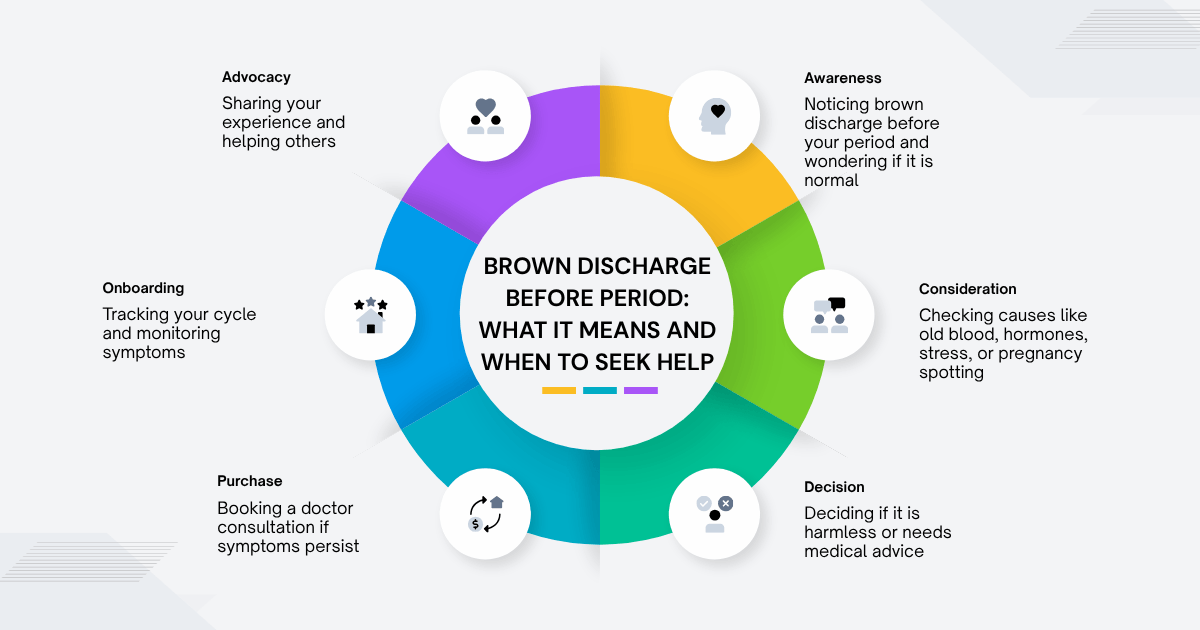
When old blood is harmless — and when it isn't.