~70%
Of menstruating women experience period bloating — it's one of the most common premenstrual symptoms
1–3 kg
Of water weight your body can retain during the luteal phase due to aldosterone-driven sodium retention
5–7 days
Typical bloating duration — starts ~1 week before, peaks just before your period, resolves within days of flow beginning
In this article
- Why period bloating happens: the aldosterone mechanism
- When bloating starts and ends: your cycle timeline
- Period bloating vs. pregnancy vs. IBS bloating
- Fast relief right now (0–60 minutes)
- 8 remedies ranked by scientific evidence
- Foods to eat and avoid for period bloating
- Exercise: what actually helps (and what doesn't)
- When to see a doctor
- Frequently asked questions
Why period bloating happens: the aldosterone mechanism
Most articles say "hormones cause bloating" and leave it there. Here's exactly what's happening.
In the luteal phase (after ovulation), progesterone rises sharply. Progesterone stimulates aldosterone — a hormone made in your adrenal glands that tells your kidneys to hold onto sodium instead of excreting it. Sodium drags water into your tissues. At the same time, falling estrogen affects osmotic balance in your cells. The combined result: your body pulls fluid from your bloodstream into surrounding tissues, causing the swelling, heaviness, and puffiness you feel in your abdomen, face, hands, and feet.
Progesterone rises
After ovulation in the luteal phase
→
Aldosterone activated
Signals kidneys to retain sodium
→
Sodium retention
Water follows sodium into tissues
→
Bloating & puffiness
1–3 kg extra fluid weight
This is entirely separate from digestive bloating (gas from food). Many women experience both simultaneously — hormonal water retention plus gut sensitivity from progesterone slowing intestinal motility. That's why some months feel worse than others, and why both dietary and hydration strategies can help.
Good news: This weight is not fat. Every kilogram gained in the week before your period is water. It resolves rapidly — usually within 24–48 hours of your period starting — as progesterone drops and your kidneys begin flushing the excess sodium and fluid.
When bloating starts and ends: your cycle timeline
Bloating doesn't arrive at random. It follows your hormone curve almost exactly. Knowing when to expect it helps you prepare rather than be caught off guard.
Period Bloating Intensity by Cycle Phase (28-Day Cycle)
Period
Day 1–5
Day 1–5
Follicular — Symptom Free
Day 6–14
Day 6–14
Early Luteal
Day 15–20
Day 15–20
Rising
Day 21–24
Day 21–24
Peak Bloat
Day 25–28
Day 25–28
Bloating Intensity
Fading
None
Mild
Moderate
Severe
Symptom-free window
Bloating begins (early luteal)
Peak bloating (late luteal)
- Day 15–20 (Early luteal): Progesterone begins rising. Mild heaviness or fullness, especially in the evening. Most women don't notice this phase.
- Day 21–24 (Mid luteal): Aldosterone effect builds. Noticeable bloating, slight weight increase, jeans feel tighter.
- Day 25–28 (Late luteal): Peak. Abdomen distended, face and hands puffy, breasts swollen. This is when it feels worst.
- Day 1–2 of period: Progesterone drops rapidly. Bloating begins resolving within hours of flow starting. Most women feel notably better by day 2–3.
Period bloating vs. pregnancy vs. IBS bloating
Three types of bloating can overlap in timing and feel similar. Knowing which one you're dealing with matters because the solutions are different.
| Period Bloating | Pregnancy Bloating | IBS / Gut Bloating | |
|---|---|---|---|
| Cause | Aldosterone / water retention | High progesterone (stays elevated); slowed gut motility | Gas from fermentation; gut sensitivity |
| Timing | Luteal phase (days 15–28) | Starts early pregnancy; worsens first trimester | After eating trigger foods; unpredictable |
| Resolution | Clears when period starts | Persists — no period | Resolves when gas passes; comes back |
| Other signs | Cramps, mood changes, breast tenderness | Missed period, nausea, frequent urination, smell sensitivity | Abdominal pain, diarrhoea or constipation, stress triggers |
| Weight change | Temporary 1–3 kg; gone after period | Progressive weight gain | Minimal actual weight change |
| Test | Track cycle; bloating timing confirms | Home pregnancy test (12–14 DPO) | Food diary; gastroenterologist assessment |
Fast relief right now (0–60 minutes)
If you're bloated and uncomfortable right now, these strategies can provide noticeable relief within an hour without any supplements or special foods.
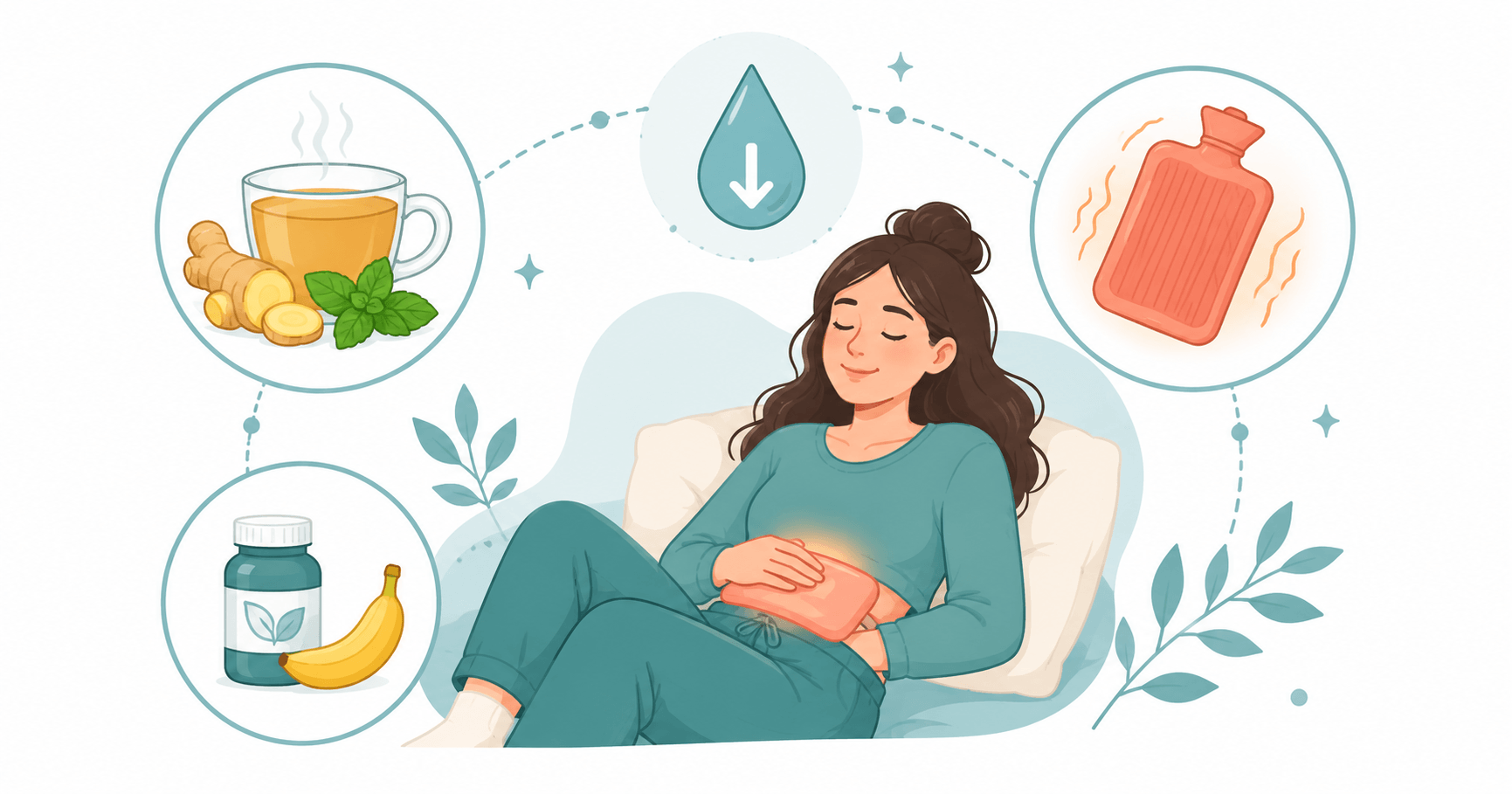
Peppermint or ginger tea
Peppermint relaxes intestinal muscles and reduces gas. Ginger is anti-inflammatory and reduces prostaglandin-driven cramping that worsens gut bloating. Drink one large mug warm.
20-minute brisk walk
Movement stimulates lymphatic circulation and intestinal motility, helping move both water retention and gas through the body. Even a short walk makes a measurable difference.
Heat pad on abdomen
Heat relaxes the uterine and abdominal muscles that tighten with cramping, reducing the sensation of fullness and pain. Apply for 15–20 minutes. Works for both water retention heaviness and gas cramping.
Drink a large glass of water
When dehydrated, your kidneys hoard sodium — making retention worse. Drinking water signals your kidneys to relax and flush. Paradoxical but clinically supported. Add a slice of lemon for mild diuretic effect.
Child's pose or gentle yoga
Gentle compression on the abdomen releases trapped gas. Child's pose, knees-to-chest, and seated twists are particularly effective for the gut bloating component of premenstrual fullness.
Skip the salty snack
If you're already retaining water and crave salty food (the aldosterone effect amplifies salt cravings), eating it will worsen retention within hours. Choose potassium-rich alternatives: banana, avocado, or sweet potato.
The hydration paradox: Drinking more water genuinely reduces water retention. Dehydration triggers your kidneys to hoard sodium and fluid as a survival mechanism — the opposite of what you want. Aim for 2–2.5 litres of water or herbal tea daily, especially in the week before your period.
8 remedies ranked by scientific evidence
Not all period bloating remedies are equally supported. Here they are, evidence-first.
🌿 Magnesium (250–400 mg/day) Strongest evidence
Clinically proven
A double-blind RCT found magnesium oxide (250 mg/day) significantly reduced fluid retention, weight gain, breast tenderness, mood symptoms, and food cravings vs placebo. Progesterone causes magnesium wasting in the luteal phase — supplementing replaces a genuine deficiency. Start from day 15 of your cycle (after ovulation). Magnesium glycinate is better tolerated than oxide; magnesium citrate has a mild laxative effect. Best form for bloating: magnesium glycinate or malate.
💊 Vitamin B6 (50–100 mg/day) Strong evidence
Natural diuretic effect
Vitamin B6 acts as a mild natural diuretic and supports serotonin synthesis — addressing both water retention and the mood component. A Cochrane review found B6 twice as effective as placebo for PMS mood symptoms, including bloating and fluid retention. Take with food. Do not exceed 100 mg/day long-term (high doses risk peripheral neuropathy). B6 + magnesium together have additive effects.
🥛 Calcium (1,200 mg/day) Strong evidence
~48% symptom reduction
RCT evidence shows calcium carbonate 1,200 mg/day reduces overall PMS symptoms by ~48%, including water retention and bloating. Calcium is involved in fluid regulation across cell membranes and modulates aldosterone sensitivity. Take with Vitamin D for absorption. Dietary calcium (dairy, leafy greens, fortified foods) also counts toward daily intake.
🥑 Reducing sodium intake Strong evidence
Directly targets the cause
Since aldosterone-driven sodium retention IS the cause of period bloating, reducing sodium directly reduces bloating. Target <1,500 mg/day in the week before your period (normal target is <2,300 mg/day). Main culprits: processed foods, canned soups, soy sauce, ready meals, crisps. Cooking at home and reading labels is the most effective dietary intervention.
🏃♀️ Aerobic exercise (30 min/day) Moderate evidence
30–50% overall PMS reduction
Exercise increases circulation and lymphatic drainage (helping move retained fluid), reduces prostaglandin production (reducing cramping-type bloating), and raises serotonin (helping with the mood-driven food cravings that worsen dietary bloating). The effect compounds over multiple cycles — consistent exercise throughout the month provides more benefit than exercise only during symptoms.
🍵 Dandelion tea or supplements Moderate evidence
Natural diuretic
Dandelion root and leaf have been shown to increase urine output significantly in small trials (comparable to some pharmaceutical diuretics). As a natural diuretic, dandelion tea helps the kidneys flush excess sodium and water without depleting potassium (unlike furosemide-type diuretics). Drink 1–2 cups in the 5 days before your period. Also contains beneficial minerals including potassium.
🦠 Probiotics (daily supplementation) Emerging evidence
Helps gut component
Probiotics (particularly Lactobacillus strains) don't directly address hormonal water retention, but they reduce the gas and digestive bloating that compounds the hormonal component. Progesterone slows gut motility in the luteal phase, allowing more fermentation — a healthy gut microbiome handles this better. Take daily, not just pre-period, for sustained effect. Look for multi-strain products with at least 10 billion CFU.
🌱 Chasteberry (Vitex agnus-castus) Limited evidence
May help overall PMS
Chasteberry acts on dopamine and prolactin receptors, which may indirectly reduce progesterone-driven bloating in some women. Evidence is mixed but several trials show meaningful reduction in breast tenderness and overall PMS symptoms including bloating. Effects build over 2–3 cycles. Discuss with your doctor before use, particularly if you take hormonal contraceptives or fertility medications.
Foods to eat and avoid for period bloating
Diet changes won't eliminate hormonal water retention entirely — that requires the hormones to change. But they can meaningfully reduce how much sodium your body has to retain, and reduce the gas/gut component that makes bloating worse.
Eat More Of These
- Bananas — high in potassium, which counteracts sodium and promotes fluid excretion
- Sweet potato — potassium-rich, anti-inflammatory, stabilises blood sugar (reduces cravings)
- Leafy greens (spinach, kale) — magnesium, potassium, and calcium in one food
- Cucumber & asparagus — natural diuretic foods; high water content helps flush
- Oily fish (salmon, sardines) — omega-3 fatty acids reduce prostaglandin-driven inflammation and cramping
- Ginger — anti-inflammatory; relieves both cramping and gut motility issues
- Whole grains (oats, quinoa) — slow digestion, prevent insulin spikes that worsen retention
- Pineapple — contains bromelain (anti-inflammatory) and acts as a mild natural diuretic
- Dark chocolate (70%+) — magnesium-rich; satisfies cravings without the sugar and salt hit
Reduce or Avoid
- Salty & processed foods — sodium binds water directly; crisps, ready meals, canned soups are the biggest contributors
- Refined carbohydrates (white bread, pastries) — spike insulin, which increases kidney sodium and water retention
- Alcohol — disrupts kidney function, depletes magnesium, worsens hormonal imbalance
- Caffeine (in excess) — can worsen breast tenderness and cause dehydration, which triggers more retention
- High-FODMAP foods — onions, garlic, beans, cauliflower, apples cause gas fermentation that compounds the water retention
- Sugary drinks & fruit juice — rapid sugar spikes trigger insulin, worsen sodium retention and cravings
- Fizzy drinks — carbonation introduces gas into the gut, worsening the fullness and distension
Exercise: what actually helps and what makes it worse
The instinct to rest when you feel heavy and uncomfortable is understandable. But movement genuinely improves period bloating — for two distinct reasons: it stimulates lymphatic drainage (moving retained fluid), and it stimulates bowel motility (releasing trapped gas).
Best exercises for period bloating
- Brisk walking (20–30 min): The most accessible and consistently effective. Gentle cardiovascular activity that doesn't exacerbate cramping while still improving circulation.
- Swimming: The hydrostatic pressure of water actually helps push fluid back into circulation, and buoyancy removes the heaviness sensation.
- Yoga (gentle/yin): Child's pose, supine twists, knees-to-chest — all provide abdominal compression and stretching that release both gas and muscle tension.
- Light cycling: Stimulates lymphatic flow and gut motility without the impact of running.
What to avoid on high-bloating days
- High-intensity HIIT: Can worsen cortisol spikes, which compound fluid retention via cortisol's aldosterone-stimulating effects.
- Heavy lifting: Core bracing with already-distended abdomen increases discomfort and intrabdominal pressure.
- Complete rest for days: The lymphatic system has no pump of its own — it relies entirely on muscle movement to circulate. Staying sedentary allows fluid to pool more severely.
Track your bloating severity alongside your cycle day in Wamiga — after 2–3 cycles, the pattern becomes clear and you can start your magnesium and dietary changes on the right days, before the bloating peaks. Download Wamiga free →
When to see a doctor
Period bloating is normal, but some patterns warrant medical attention.
Bloating that doesn't resolve with your period
If bloating persists more than 3–4 days into your period, or is present throughout your cycle without a symptom-free window, it may indicate endometriosis, ovarian cysts, or another underlying condition.
Sudden severe or worsening bloating
Rapidly worsening abdominal distension — especially with pain, fever, or changes in bowel habits — should be evaluated promptly. This is not typical PMS bloating.
Bloating with missed periods
If your period hasn't arrived and you're bloating, take a pregnancy test. Persistent bloating with a missed period that tests negative also warrants evaluation — PCOS, thyroid disorders, and other conditions can cause both.
Bloating severe enough to disrupt daily life
If bloating is causing you to regularly miss work, cancel plans, or feel unable to function in the week before your period, that meets the clinical threshold for PMS treatment. Prescription options (spironolactone, hormonal contraceptives) can directly target aldosterone-driven retention.
Frequently asked questions
Why am I so bloated before my period?
Period bloating is caused by hormonal water retention, not gas or fat. Rising progesterone stimulates aldosterone, which tells your kidneys to hold onto sodium and water. Your body can retain 1–3 kg of extra fluid in the week before your period. This resolves rapidly when progesterone drops as your period starts.
When does period bloating start and how long does it last?
Most women notice bloating starting around days 20–21 of a 28-day cycle (about a week before their period). It peaks in the final 2–3 days before menstruation and resolves within 1–3 days of the period starting. Total duration is usually 5–7 days.
What is the fastest relief for period bloating?
For fast relief within 30–60 minutes: drink a large glass of water or herbal tea (peppermint or ginger), take a 20-minute walk, and apply a heat pad to your abdomen. Avoid salty foods and alcohol, which worsen water retention. For sustained relief across cycles, magnesium supplementation (250–400 mg/day starting from day 15) has the strongest clinical evidence.
Does drinking water actually help period bloating?
Yes — it seems counterintuitive but it works. When dehydrated, your kidneys hold onto sodium and water even more aggressively. Drinking water signals your kidneys to relax and flush excess sodium. Aim for 2–2.5 litres per day, especially in the week before your period. Warm water or herbal teas (ginger, dandelion, peppermint) work particularly well.
Does magnesium help with period bloating?
Yes — magnesium has the strongest clinical evidence of any supplement for period bloating. A double-blind RCT found magnesium oxide significantly reduced fluid retention, weight gain, and breast tenderness. Progesterone causes magnesium wasting in the luteal phase, so supplementing replaces a genuine deficiency. Magnesium glycinate is better tolerated. Start from day 15 of your cycle.
What foods make period bloating worse?
The biggest culprits are: high-sodium processed foods (crisps, ready meals, soy sauce) — sodium binds water directly; refined carbohydrates — cause insulin spikes that increase water retention; alcohol — disrupts kidney function and depletes magnesium; excess caffeine; and high-FODMAP foods (onions, garlic, cauliflower, beans) — cause gas that compounds water retention.
Is period bloating the same as pregnancy bloating?
They feel similar but differ in resolution. Period bloating resolves when your period starts (progesterone drops). Pregnancy bloating persists — progesterone stays elevated throughout pregnancy. If bloating continues after your period was due, take a pregnancy test. Pregnancy bloating is also typically accompanied by nausea, smell sensitivity, a missed period, and frequent urination.
Sources: Thiébaut ACM & Clavel-Chapelon F (aldosterone in PMS); Magnesium RCT — Fathizadeh N. et al. Iranian J Nursing & Midwifery Research; Cochrane Review on Vitamin B6 for PMS; Office on Women's Health: Premenstrual Syndrome; Cleveland Clinic: Period Bloating; NIH/PubMed systematic reviews on PMS treatment; Saad et al. on probiotics and gut health. Content is for informational purposes only — consult a qualified healthcare professional for diagnosis and treatment.