6 days
The maximum length of the fertile window per cycle
120 hrs
How long sperm can survive in the fallopian tubes
12–24 hrs
How long the egg remains viable after ovulation
In this article
- What the fertile window actually is
- Sperm vs egg survival — the biology behind the window
- Finding your window for any cycle length
- 6 signs you're in your fertile window right now
- 5 methods to track it — ranked by accuracy
- 6 fertile window myths debunked
- Signs your fertile window may not be opening
- Frequently asked questions
If you are trying to conceive — or trying to understand your body better — the fertile window is the single most important concept to grasp. It is the only period in your entire cycle when pregnancy is biologically possible, and it is shorter and more precise than most people realise. Getting this right changes everything.
What the Fertile Window Actually Is
The fertile window is the span of days in your menstrual cycle during which sexual intercourse can result in pregnancy. It is determined entirely by two biological facts: how long an egg survives after ovulation, and how long sperm survive in the female reproductive tract.
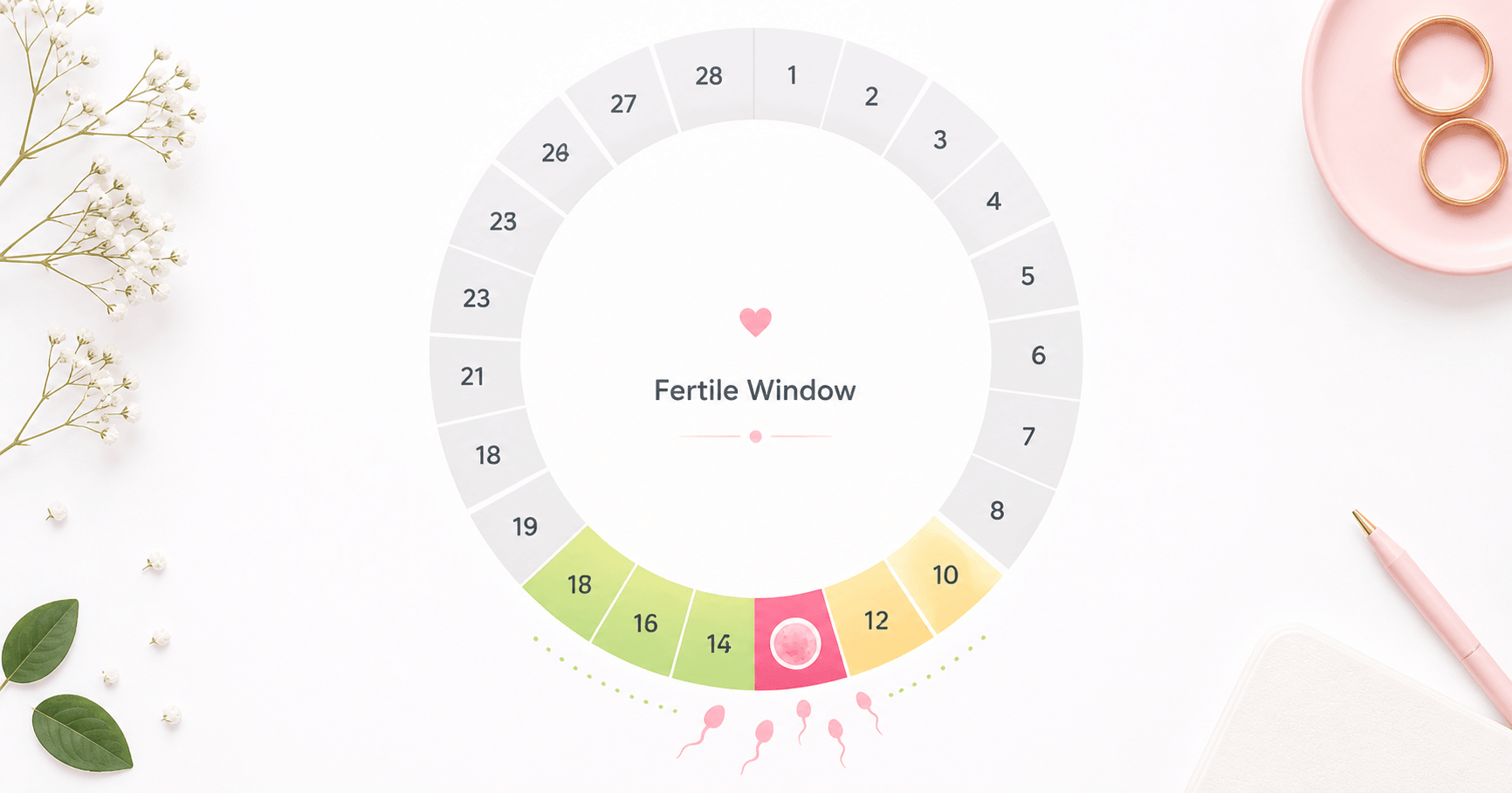
The window is 6 days long — the 5 days leading up to ovulation plus ovulation day itself. It ends at ovulation because the egg, once released, only lives for 12–24 hours. Intercourse after the egg has died cannot result in pregnancy — the window has closed. Intercourse up to 5 days before ovulation can still result in pregnancy because sperm deposited early can wait in the fallopian tubes for the egg to arrive.
Key insight: The highest-probability days are the 2 days before ovulation and ovulation day itself — conception probability on these peak days is approximately 25–33% per cycle. But don't wait for the day of ovulation to act — waiting until the egg is released means half the window is already gone.
Sperm vs Egg Survival — The Biology Behind the Window
The fertile window exists because of a dramatic mismatch between sperm and egg survival. Understanding this asymmetry is the key to understanding why timing matters so much.
Survival time comparison — sperm vs egg after release
Sperm
Up to 120 hours (5 days)
5 days in optimal cervical mucus conditions
Sperm deposited in fertile-quality cervical mucus can remain viable in the fallopian tubes for up to 5 days. This is why intercourse earlier in the fertile window still leads to pregnancy — the sperm wait for the egg. Average survival is 2–3 days; 5 days is possible with the best mucus conditions.
Egg
12–24 hours only
12–24h
Once ovulation occurs, the egg travels into the fallopian tube and is only viable for 12–24 hours. If no sperm is present or waiting to fertilise it within this window, the egg disintegrates and the cycle closes. No conception is possible after this point until the next ovulation.
The takeaway: Because sperm survive so much longer than the egg, the most effective strategy is to have sperm already waiting in the fallopian tube when ovulation occurs — not to time intercourse for the exact moment of ovulation. Having sex in the 1–3 days before your predicted ovulation date gives the highest cumulative pregnancy probability.
Finding Your Fertile Window for Any Cycle Length
The "day 14" rule only applies to a textbook 28-day cycle. If your cycle is longer or shorter, your ovulation day — and therefore your fertile window — shifts accordingly. Ovulation typically occurs 14 days before the end of your cycle (the luteal phase is relatively fixed at 12–14 days, while the follicular phase varies).
Formula: Ovulation day = Cycle length − 14. Fertile window = Ovulation day minus 5 days to ovulation day.
24-day cycle
Short cycle
Ovulation day ≈ Day 10 | Fertile window: Days 5–10
28-day cycle
Average cycle
Ovulation day ≈ Day 14 | Fertile window: Days 9–14
32-day cycle
Slightly long
Ovulation day ≈ Day 18 | Fertile window: Days 13–18
35-day cycle
Long cycle
Ovulation day ≈ Day 21 | Fertile window: Days 16–21
Important caveat: These are estimates based on average luteal phase length. Your actual ovulation day can shift by several days each cycle due to stress, illness, travel, or changes in sleep. This is why calendar calculation alone is not reliable — combine it with physical signs or LH testing for accuracy.
6 Signs You're in Your Fertile Window Right Now
Your body sends clear signals that the fertile window has opened. Learning to read these signs means you never have to rely on guesswork alone.
Egg-white cervical mucus
Clear, stretchy, slippery discharge that resembles raw egg whites. The most reliable physical sign — estrogen peak creates this mucus to help sperm survive and travel.
LH surge on test strip
A positive LH test indicates the hormone surge that triggers ovulation within 24–36 hours. Ovulation day is your peak fertility day.
BBT dip then rise
Basal body temperature drops slightly just before ovulation, then rises 0.2–0.5°C after. The rise confirms ovulation has occurred — best for retrospective tracking.
Cervix position change
At peak fertility the cervix is higher, softer, and more open (SHOW — Soft, High, Open, Wet). During non-fertile phases it is lower, firmer, and closed.
Heightened libido
Rising estrogen and the LH surge trigger a natural peak in sexual desire. This is an evolutionary signal — your body is steering you toward conception at the ideal time.
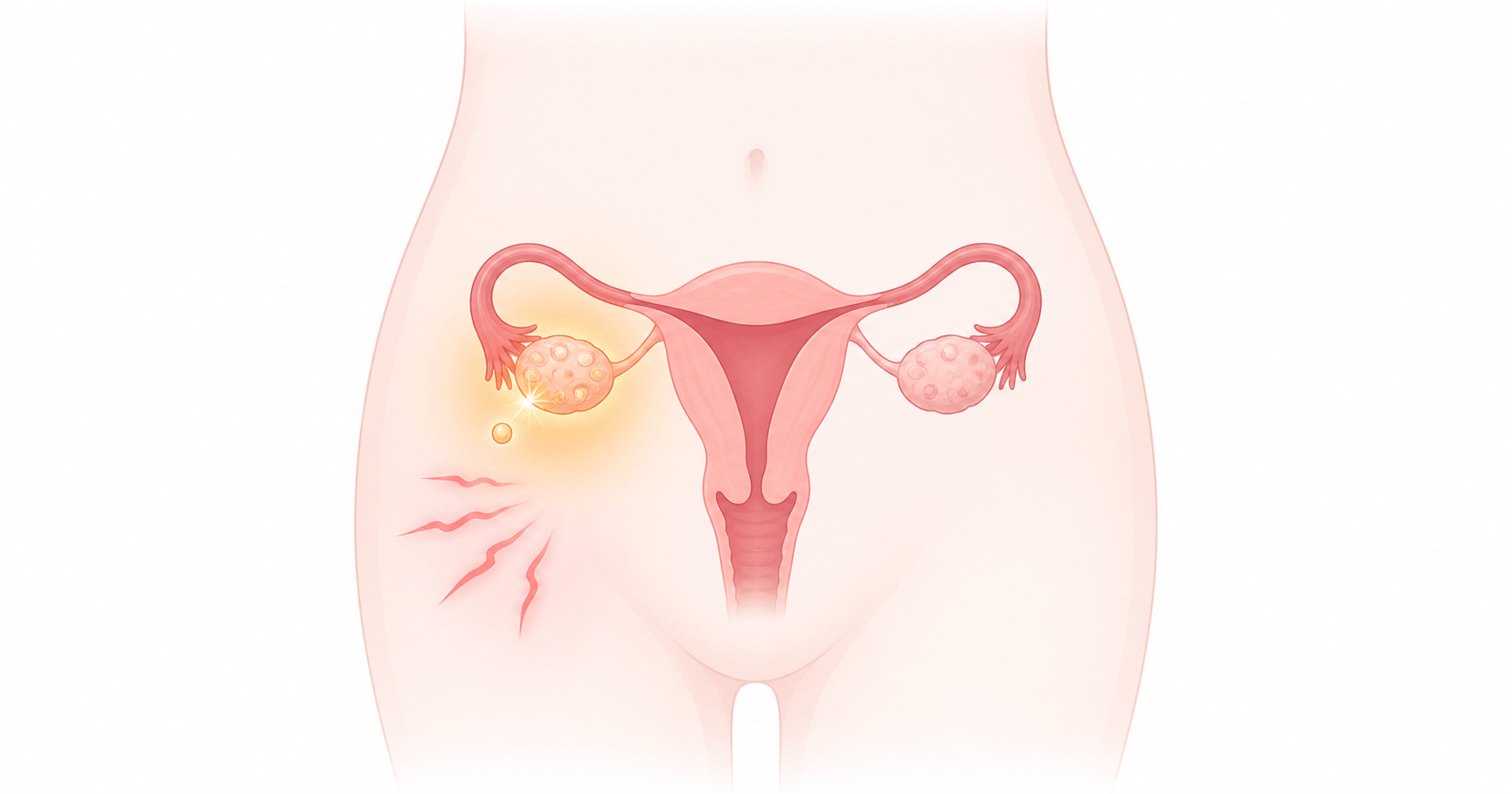
Mid-cycle pain (mittelschmerz)
A brief one-sided twinge or ache signals the follicle rupturing and the egg releasing. Felt by about 20% of women — its presence confirms ovulation is happening.
5 Methods to Track Your Fertile Window — Ranked by Accuracy
Not all tracking methods are equal. Here they are in order of reliability, with honest assessments of what each can and cannot do.
6 Fertile Window Myths — Debunked
Misinformation about the fertile window is widespread and can either cause unwanted pregnancies or unnecessary frustration when trying to conceive. Here are the most common myths, corrected.
Myth
Fact
Day 14 is when every woman ovulates
Day 14 only applies to a textbook 28-day cycle. Ovulation can occur anywhere from day 10 to day 21 depending on your cycle length and month-to-month variation.
You can't get pregnant right after your period
In short cycles (24 days or fewer), your fertile window can begin before day 7 — meaning you could conceive if you have sex late in your period. Sperm deposited then can survive long enough to meet an early-ovulated egg.
You need to have sex on the day of ovulation
Having sex in the 2–3 days before ovulation is actually more effective — waiting until the exact day of ovulation means the egg may have already passed its viability window by the time sperm arrive.
If you have regular periods, your fertile window is predictable
Regular periods mean consistent cycle length, not consistent ovulation timing. Stress, illness, sleep disruption, or travel can shift ovulation by several days in an otherwise regular cycle.
Ovulation always produces clear signs you can feel
Only about 20% of women reliably feel mittelschmerz. The majority ovulate without any noticeable physical sensation. Signs like egg-white mucus and LH test strips are far more reliable indicators than waiting to "feel" something.
Two periods per month means two fertile windows
Bleeding twice a month is usually one period plus spotting — not two ovulations. True double ovulation (releasing eggs in a single cycle) is rare and both eggs are released within 24 hours, not days apart.
Signs Your Fertile Window May Not Be Opening
If you are actively trying to conceive and not succeeding despite well-timed intercourse, it is worth considering whether you are ovulating consistently. Anovulation (failure to ovulate) is more common than most people realise and affects about 30% of women experiencing infertility.
Consistently irregular cycles
Cycles varying by more than 9 days, or cycles shorter than 21 days or longer than 35 days, often indicate irregular or absent ovulation. See a GP if this is your pattern.
No BBT rise after mid-cycle
If you have tracked BBT for 3+ cycles and never see a sustained temperature rise in the second half, you may not be ovulating — progesterone (which causes the rise) is only produced after ovulation.
LH strips never go positive
If you test daily for an entire cycle and never see a positive LH result, the surge may not be occurring — suggesting anovulation. Test twice daily for highest sensitivity before concluding this.
No egg-white mucus ever
Egg-white cervical mucus is driven by the estrogen peak before ovulation. Its complete absence across multiple cycles can indicate low estrogen, PCOS, or thyroid dysfunction — worth investigating.
Frequently Asked Questions
What is the fertile window?
The fertile window is the 6-day period each menstrual cycle during which pregnancy is possible — the 5 days before ovulation plus ovulation day itself. It exists because sperm can survive in the fallopian tubes for up to 5 days, while an egg is only viable for 12–24 hours after being released.
When is the fertile window in my cycle?
In a 28-day cycle it typically falls between days 9 and 14. For other cycle lengths, use the formula: ovulation day = cycle length minus 14, then count back 5 days for the window start. However, ovulation can shift by several days each cycle — physical signs (egg-white mucus, LH tests) give you real-time accuracy that calendar calculations cannot.
How do I know I'm in my fertile window?
The most reliable real-time indicator is a positive LH test strip, which signals ovulation will occur in 24–36 hours. Egg-white cervical mucus is a strong secondary sign. Mild one-sided pelvic pain (mittelschmerz) signals ovulation is occurring or has just occurred — meaning the window is at its end.
Can I get pregnant outside my fertile window?
No — pregnancy is only biologically possible during the 6-day fertile window. Outside this window, either no egg is present or no viable sperm remain from earlier intercourse. However, because ovulation timing varies, calendar estimates of the window are imprecise — which is why unprotected sex outside your "expected" fertile window can still lead to pregnancy if ovulation occurred earlier or later than predicted.
What are the two most fertile days?
The day before ovulation and ovulation day itself carry the highest per-cycle pregnancy probability — approximately 25–33% each. Earlier days in the window (2–4 days before ovulation) still have meaningful pregnancy probability (8–20%) because sperm deposited then can survive until the egg arrives.
How many fertile days does a woman have in her lifetime?
Assuming a reproductive lifespan of roughly 30 years (ages 15–45) with 12 cycles per year and a 6-day window per cycle, a woman has approximately 2,160 fertile days in her lifetime — about 5.9 years. Despite this seemingly large number, the probability per cycle remains moderate, and fertility declines significantly after age 35.
Sources & Further Reading
The guidance in this article is informed by reputable medical and public-health organizations: