~71%
Of menstruating women report fatigue as a premenstrual symptom — one of the most common PMS complaints
20–40%
Drop in serotonin during the late luteal phase — the primary driver of hormonal fatigue and mood changes
3–6 months
How long it takes for heavy periods to deplete iron stores — explaining why fatigue gets progressively worse over time
In this article
- The 3 types of period fatigue — which one do you have?
- Your cycle energy map: when tiredness peaks and why
- Type 1: Hormonal fatigue (progesterone and serotonin)
- Type 2: Iron-depletion fatigue (the silent monthly drain)
- Type 3: Sleep-disruption fatigue (why 9 hours isn't enough)
- Evidence-ranked supplement protocol
- Foods that fight period fatigue
- Lifestyle strategies: what actually helps
- When fatigue signals something more serious
- Frequently asked questions
The 3 types of period fatigue — which one do you have?
Most advice about period fatigue treats it as one thing. It isn't. There are three mechanically distinct causes, each with a different timeline, different accompanying symptoms, and different solutions. Identifying which type (or combination) you're dealing with is the most important step.
⚡ Type 1: Hormonal
Cause: Progesterone rise → serotonin drops 20–40% in late luteal phase. Energy and mood crash together.
When: Days 23–28 of cycle. Resolves by day 2–3 of period.
Signs: Fatigue + mood changes + irritability + food cravings. Comes together.
Clue: improves fast when period arrives🩸 Type 2: Iron Depletion
Cause: Monthly blood loss depletes iron stores over 3–6 months. Reduces oxygen-carrying capacity.
When: Worsens month-to-month. Persists into and beyond period. Doesn't fully resolve.
Signs: Fatigue extends into follicular phase. Pale skin, ice cravings, breathlessness.
Clue: fatigue getting worse each cycle😴 Type 3: Sleep Disruption
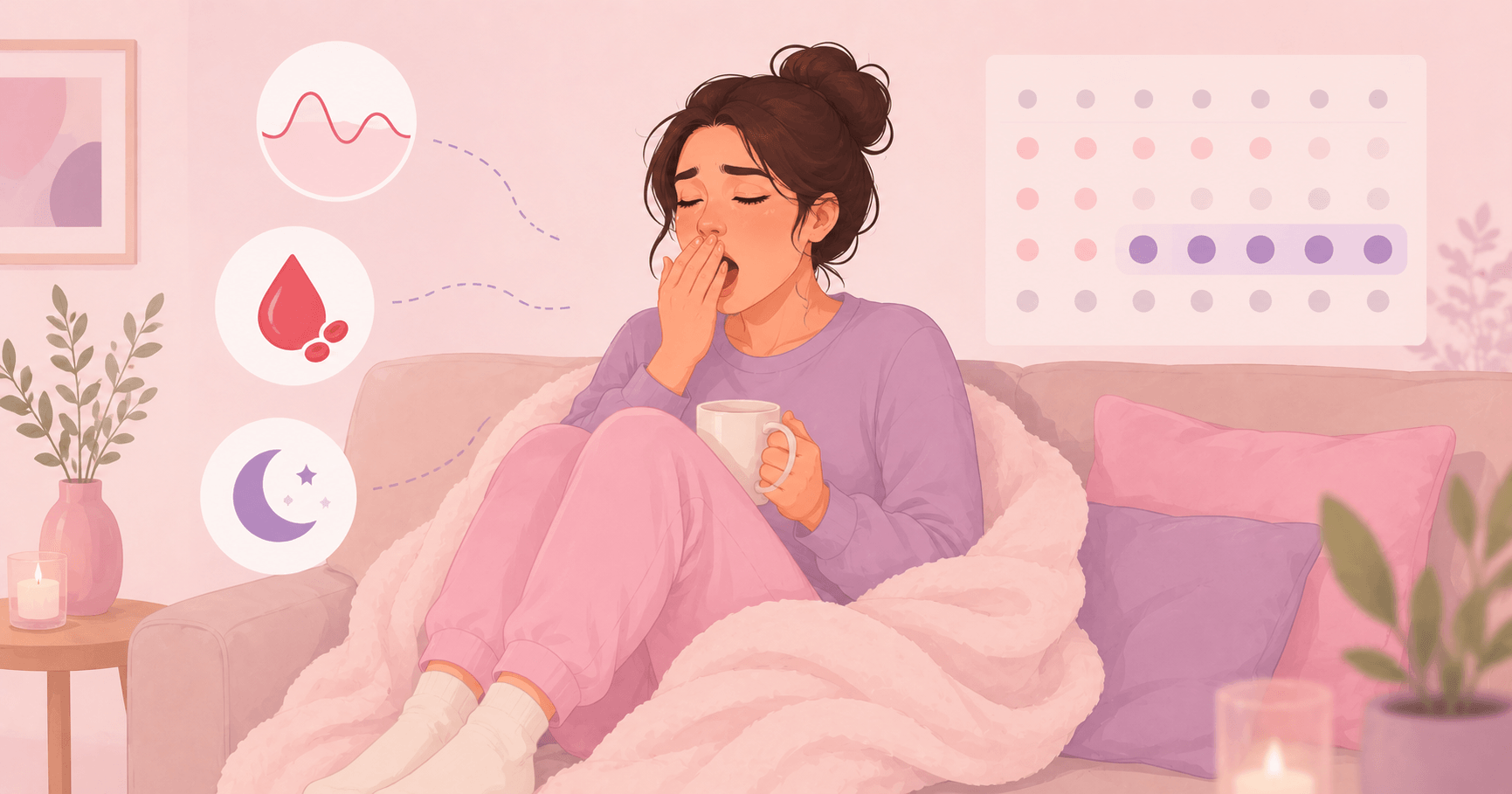
Cause: Progesterone fragments sleep architecture — less deep sleep, more awakenings — even with enough hours.
When: Last 3–4 days before period and first 2 days of bleeding.
Signs: "I slept 9 hours but feel exhausted." Multiple nighttime awakenings.
Clue: sleeping a lot but still unrefreshedMost women experience a mix of all three types. However, identifying the dominant pattern helps prioritise remedies: hormonal fatigue responds best to serotonin-supporting strategies (magnesium, B6, exercise); iron fatigue requires supplementation and dietary iron; sleep fatigue requires quality-focused sleep hygiene, not just more hours in bed.
Your cycle energy map: when tiredness peaks and why
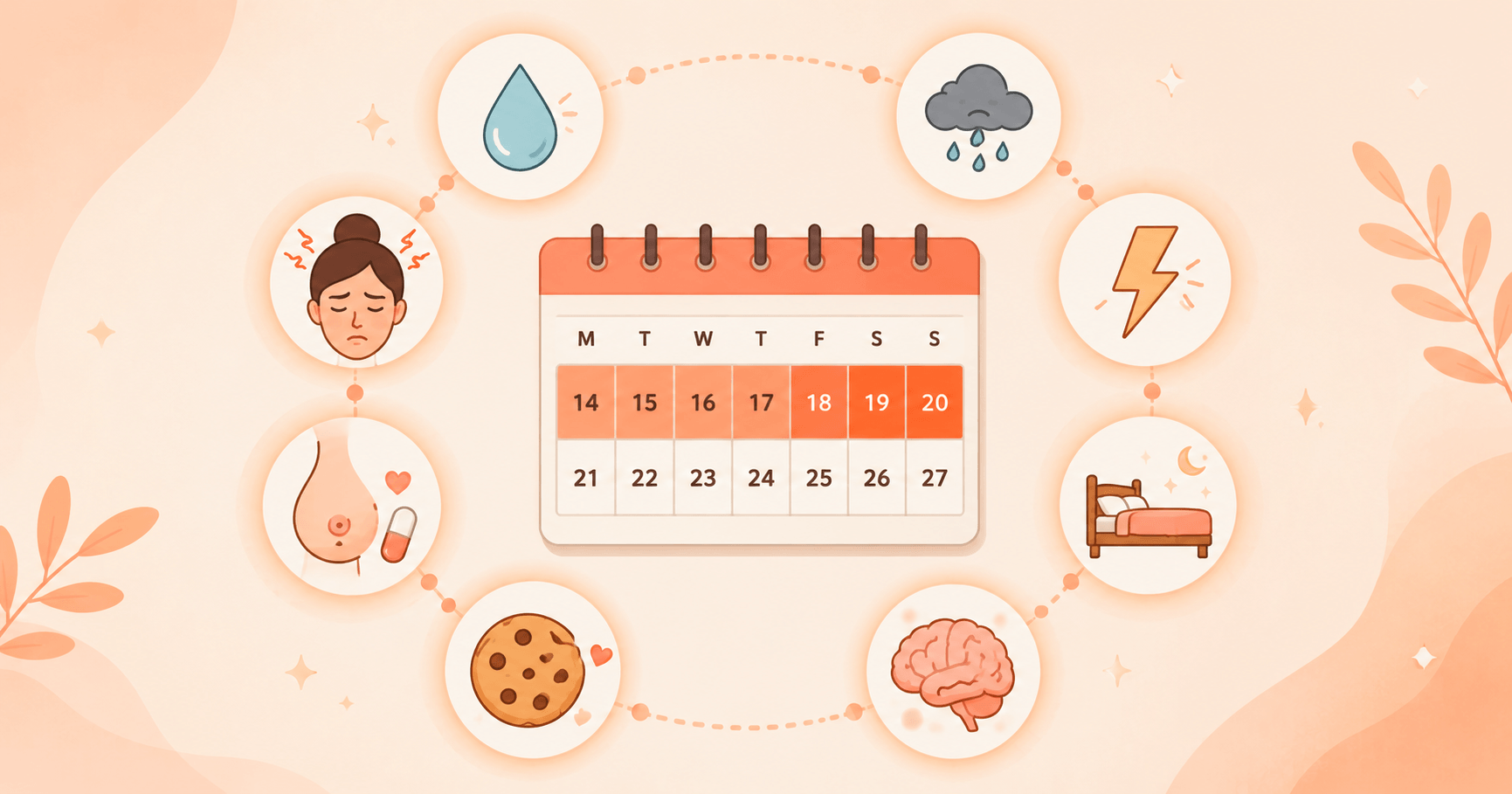
Your energy doesn't stay the same across your cycle — it follows a predictable hormonal curve. Knowing where you are in this curve helps you plan ahead rather than be blindsided.
Cycle Energy Levels by Phase (28-Day Cycle)
Period
Day 1–5
Low→Rising
Day 1–5
Low→Rising
Follicular — Peak Energy
Day 6–14
Day 6–14
Ov.
Early Luteal
Day 15–22
Declining
Day 15–22
Declining
Late Luteal — FATIGUE PEAK
Day 23–28
Day 23–28
Energy Level
Peak energy zone (follicular)
Ovulation energy spike
Fatigue peak (late luteal)
Energy typically restores 2–3 days after your period starts as progesterone drops and serotonin recovers.
- Days 6–14 (Follicular): Rising estrogen boosts serotonin and dopamine. Many women feel their sharpest, most motivated, and most energetic here. Best phase for demanding tasks, hard workouts, and socialising.
- Around day 14 (Ovulation): A brief testosterone surge adds a final energy peak. Some women feel a distinct boost for 1–2 days.
- Days 15–22 (Early Luteal): Progesterone rises. Energy begins its gradual decline. Sleep quality starts to degrade. Mild fatigue possible.
- Days 23–28 (Late Luteal): Serotonin drops sharply. Sleep fragmentation peaks. Fatigue is at its worst. This is when most women notice exhaustion, brain fog, and low motivation.
- Days 1–5 (Period): Fatigue begins lifting as progesterone drops — but blood loss may sustain tiredness, especially if flow is heavy.
Type 1: Hormonal fatigue — progesterone, serotonin, and the energy crash
This is the most common form of period fatigue, and it's entirely driven by neurotransmitter changes in the late luteal phase.
The progesterone–serotonin connection
After ovulation, progesterone rises sharply. Progesterone metabolises into allopregnanolone — a neurosteroid that modulates GABA receptors in the brain (the calming, sedating system). At the same time, rising then falling estrogen affects serotonin receptor density and reuptake.
The result: in the late luteal phase, serotonin availability drops by 20–40%. Since serotonin regulates mood, motivation, energy, and appetite, this drop causes the classic PMS cluster: fatigue, low mood, irritability, food cravings, and brain fog — all arriving together, all biochemically connected.
Why you feel exhausted but can't sleep
Progesterone's GABA-modulating effect should theoretically promote sleep — and it does cause drowsiness. The paradox is that it also fragments sleep architecture (covered in detail in Type 3 below). You feel sedated and tired but don't get restorative deep sleep, creating the classic "exhausted but restless" luteal phase experience.
What helps: serotonin support
- Magnesium glycinate (300–400 mg/day from ovulation): Reduces aldosterone, supports GABA function, and helps sustain serotonin activity
- Vitamin B6 (50–100 mg/day): Direct cofactor in serotonin synthesis — your brain needs B6 to make serotonin from tryptophan
- Tryptophan-rich foods: Turkey, eggs, oats, pumpkin seeds — the dietary precursor your brain converts into serotonin
- Aerobic exercise: Increases serotonin and endorphins, counteracting the luteal phase neurotransmitter dip
- Consistent sleep timing: Circadian rhythm disruption amplifies serotonin instability
Type 2: Iron-depletion fatigue — the silent monthly drain
This type is frequently missed because it builds slowly and doesn't announce itself. But it explains why so many women find their period fatigue gets noticeably worse over months — even when nothing else has changed.
How much iron do you lose each period?
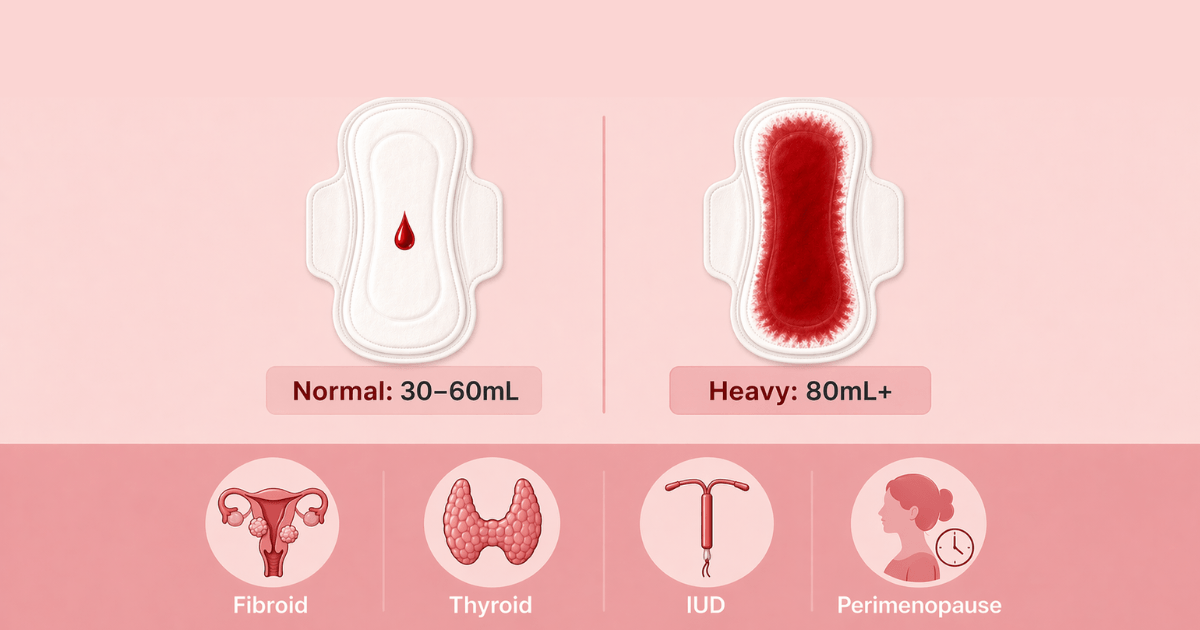
- Normal flow (30–60 mL blood): ~15–30 mg iron per cycle
- Heavy flow (≥80 mL blood): 40 mg+ iron per cycle
- Your total iron stores: Typically 300–500 mg in total
The maths is stark: with heavy periods and inadequate dietary replacement, you can deplete your stores over just a few months. Iron is essential for haemoglobin (which carries oxygen in the blood) and for mitochondrial enzymes that produce ATP (cellular energy). Without enough iron, your cells literally cannot produce energy efficiently.
The 6-month depletion timeline
Month 1–2
Iron stores: ~90% — no symptoms
Normal energy
Month 3
Stores: ~65% — mild fatigue begins
Slightly tired
Month 4
Stores: ~40% — noticeable fatigue
Clearly tired
Month 5
Stores: ~20% — fatigue persists into follicular
Severe fatigue
Month 6
Stores: depleted — clinical anaemia possible
Anaemia risk
Signs your fatigue is iron-related
- Fatigue that extends beyond your period into the first week of your cycle
- Pale or slightly ashen skin, especially on the inner lower eyelid
- Ice cravings (pagophagia) — a classic, unexplained sign of iron deficiency
- Breathlessness or rapid heartbeat during normally easy activities
- Fatigue getting worse over several cycles, not just this month
- Heavy periods (soaking through pads/tampons, large clots)
What to do: Ask your GP for a serum ferritin test (not just haemoglobin — ferritin measures stored iron and drops before anaemia develops). A ferritin below 30 ng/mL can cause fatigue even when haemoglobin is technically normal. Iron supplementation plus addressing heavy bleeding (if present) is the solution.
Type 3: Sleep-disruption fatigue — why 9 hours isn't enough
If you've ever slept a full night before your period and woken up feeling like you barely slept at all, this section explains exactly what's happening in your brain and why more hours in bed doesn't fix it.
What sleep studies actually show
Objective polysomnography studies (where brain waves are measured during sleep) consistently show that during the late luteal phase, women's sleep architecture degrades in two key ways:
Follicular Phase Sleep
Deep (slow-wave) sleepNormal %
Awakenings per hourLow
Sleep fragmentationMinimal
Restorative qualityHigh
Morning feelingRefreshed
Late Luteal Phase Sleep
Deep (slow-wave) sleepReduced %
Awakenings per hourIncreased
Sleep fragmentationSignificant
Restorative qualityLow
Morning feelingUnrefreshed
The mechanism: progesterone raises your core body temperature (the BBT shift you'd see in temperature tracking). Your brain needs a drop in core temperature to initiate and maintain deep sleep. With temperature elevated, deep sleep is shorter and more fragmented — even if you're in bed for 9 hours.
Sleep quality optimisation for the luteal phase
- Cool your bedroom to 17–19°C (63–66°F) — counteracts the progesterone-driven temperature rise and helps initiate deep sleep
- Consistent bedtime (±30 min) — luteal phase sleep is more sensitive to circadian disruption than other phases
- Magnesium glycinate 200–400 mg, 30–60 min before bed — supports GABA and reduces sleep fragmentation
- No screens 60 min before bed — blue light suppresses melatonin, and the luteal brain is more sensitive to this disruption
- Avoid alcohol in the week before your period — alcohol dramatically worsens sleep architecture fragmentation
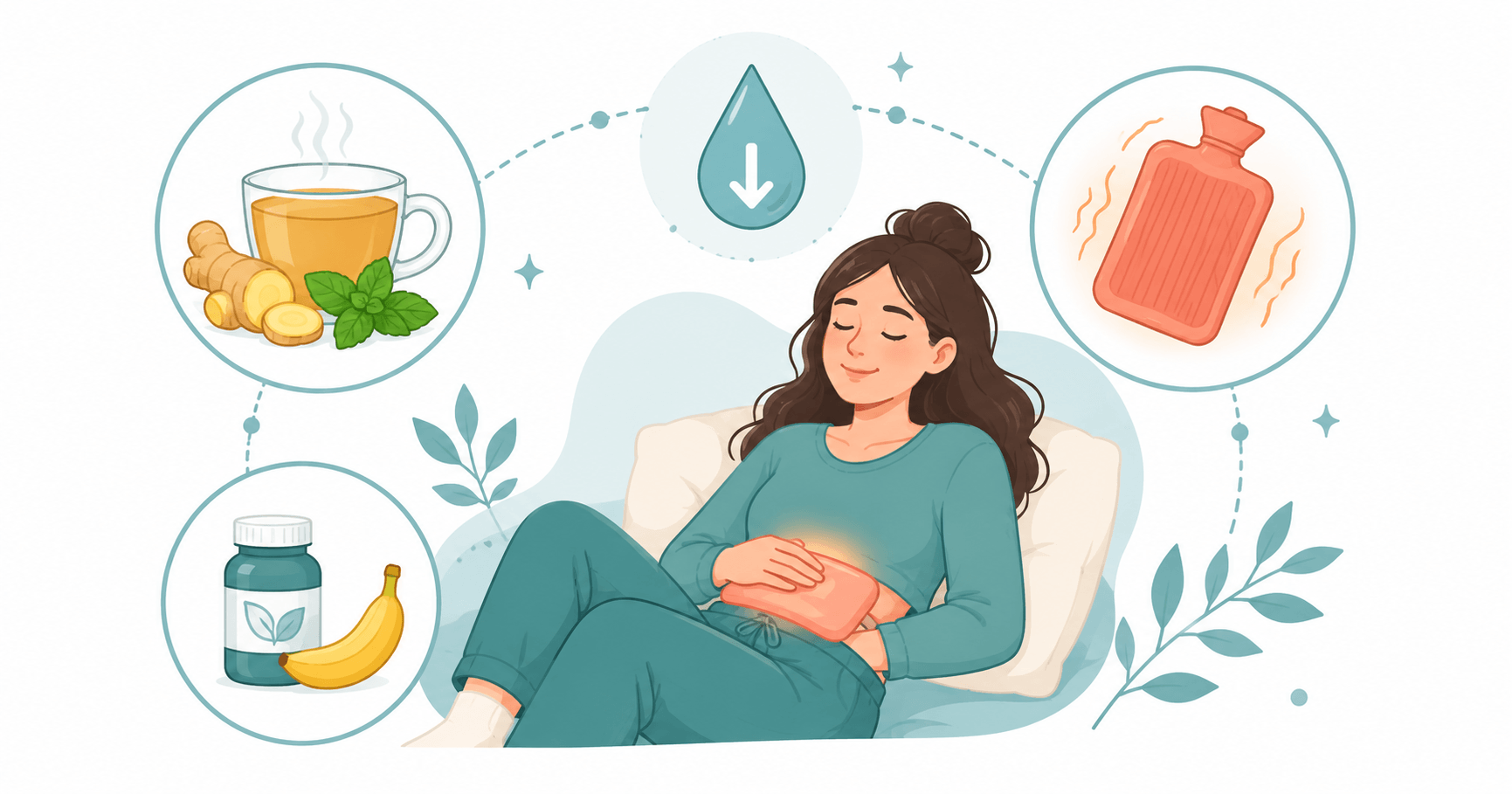
Evidence-ranked supplement protocol for period fatigue
These are the supplements with the strongest research behind them, in order of evidence quality. Always confirm deficiencies with blood tests before starting iron, B12, or vitamin D supplementation.
🩸 Iron (ferrous bisglycinate 15–25 mg or ferrous sulfate 325 mg) Strong — if deficient
Gold standard for iron-depletion fatigue. Ferrous bisglycinate is better absorbed and gentler on the stomach than ferrous sulfate. Take with vitamin C for absorption. Take away from tea, coffee, and calcium. Test ferritin first — supplementing without deficiency provides no benefit. Timeline: 3–4 weeks for noticeable energy improvement; 12 weeks to replete stores.
🌿 Magnesium glycinate (300–400 mg/day from day 15) Strong evidence
Addresses both hormonal and sleep-disruption fatigue. Progesterone wasting increases magnesium needs in the luteal phase. Clinical evidence shows significant reduction in PMS symptoms including fatigue, water retention, and mood. Glycinate form is the most bioavailable and least likely to cause digestive upset. Take 30 min before bed for sleep quality benefits.
💊 Vitamin B6 (50–100 mg/day) Strong evidence
B6 is a direct cofactor in serotonin, dopamine, and norepinephrine synthesis — the exact neurotransmitters depleted in the luteal phase. Cochrane review found B6 significantly reduces premenstrual mood symptoms including fatigue. Take with food. Do not exceed 100 mg/day long-term. B6 + magnesium together have additive effects on PMS fatigue.
☀️ Vitamin D (1,000–2,000 IU/day) Moderate evidence
Vitamin D deficiency is extremely common (affects ~40% of UK adults) and directly causes fatigue, low mood, and muscle weakness. It also modulates serotonin synthesis, making deficiency particularly impactful on luteal phase fatigue. Get your 25-OH vitamin D level checked — if below 50 nmol/L, supplementation is warranted. Take with vitamin K2 for optimal metabolism. Timeline: 6–8 weeks.
⚡ CoQ10 / Ubiquinol (100–200 mg/day) Moderate evidence
CoQ10 is essential for mitochondrial energy production (the electron transport chain). Clinical evidence shows CoQ10 supplementation reduces fatigue in conditions characterised by mitochondrial dysfunction. The ubiquinol form has significantly better absorption than ubiquinone. Particularly relevant if fatigue is year-round (not purely cyclical). Timeline: 6–8 weeks for measurable benefit.
🌱 Ashwagandha (300–600 mg standardised extract) Moderate evidence
An adaptogen (Withania somnifera) with clinical evidence for reducing cortisol levels and improving stress-related fatigue. A 12-week RCT showed significant reductions in fatigue scores. Helps when luteal phase fatigue is compounded by chronic stress or high cortisol (which amplifies PMS). Look for KSM-66 or Sensoril standardised extracts. Timeline: 4–6 weeks. Discuss with your doctor before use if pregnant or on thyroid medication.
💉 Vitamin B12 + Folate Evidence: if deficient
B12 deficiency causes fatigue and neurological symptoms. Particularly relevant in vegans/vegetarians (B12 only found in animal products), those on long-term metformin (which depletes B12), or those with absorption issues. Folate supports energy metabolism and neurotransmitter synthesis. Both are inexpensive and low-risk to supplement — B-complex vitamins cover both alongside B6.
Foods that fight period fatigue
Eat More Of These
- Red meat & poultry — heme iron (most absorbable form); replenishes blood loss
- Lentils, beans, tofu — plant-based iron; pair with vitamin C to boost absorption
- Leafy greens (spinach, kale) — iron + magnesium + folate in one food
- Oily fish (salmon, sardines) — omega-3 reduces inflammation and prostaglandin-driven exhaustion
- Eggs — B12, choline, and tryptophan (serotonin precursor)
- Oats, quinoa, brown rice — slow-release energy; prevents blood sugar crashes that worsen fatigue
- Pumpkin seeds — highest magnesium content of any food (per gram); tryptophan-rich
- Dark chocolate (70%+) — magnesium-rich; satisfies cravings without the sugar crash
- Citrus & berries — vitamin C enhances iron absorption from every meal
Reduce These
- Caffeine (after 1 pm) — blocks adenosine receptors, worsens luteal phase sleep fragmentation
- Alcohol — dramatically fragments sleep architecture, depletes B vitamins and magnesium, raises cortisol
- Refined sugar & white carbs — blood sugar spikes → insulin surge → energy crash 1–2 hours later
- Tea & coffee with iron-rich meals — tannins block iron absorption by up to 60%
- Ultra-processed snacks — low nutrient density; provide empty calories without the B vitamins, magnesium, or iron your fatigued body needs
- High-sodium foods — compounds water retention, worsening the heavy, fatigued feeling
Lifestyle strategies: what actually helps
Exercise: the counterintuitive remedy
The instinct when fatigued is to rest. But gentle movement — especially in the luteal phase — genuinely reduces fatigue by increasing serotonin and endorphins, improving lymphatic circulation, and boosting mitochondrial efficiency. The key is intensity: high-intensity workouts can spike cortisol and worsen luteal fatigue, while moderate aerobic exercise (brisk walking, swimming, light cycling) reduces it.
- Follicular phase (days 6–14): Best time for HIIT, heavy lifting, challenging runs — energy is high and recovery is fast
- Late luteal phase (days 23–28): Switch to 20–30 min walks, yoga, gentle cycling — this reduces fatigue without worsening it
Blood sugar management
Insulin resistance increases in the luteal phase — meaning your body is less efficient at processing glucose for energy. Blood sugar swings worsen fatigue dramatically. Strategy: eat protein, fat, and complex carbohydrates together at every meal (this slows glucose absorption); avoid eating large amounts of simple sugars; don't skip meals in the pre-menstrual week.
Stress management
Chronic stress raises cortisol, which compounds serotonin depletion and worsens sleep quality — amplifying every mechanism of period fatigue. Even 10 minutes of daily mindfulness or breathing exercises measurably reduces cortisol and improves the luteal phase experience over 2–3 cycles.
Tracking your energy level daily in Wamiga — even just a simple 1–5 rating — alongside cycle day and sleep quality reveals which type of fatigue you experience and when it peaks. After 2–3 cycles, the pattern becomes clear enough to prepare. Download Wamiga free →
When fatigue signals something more serious
Period fatigue is real and common, but some patterns point to conditions that need medical attention.
Fatigue that doesn't clear after day 5 of your period
Hormonal period fatigue resolves within 2–3 days of your period starting. If you're still exhausted a week into your cycle, this points to iron-deficiency anaemia, thyroid dysfunction, B12 deficiency, or another underlying condition. Request a blood panel: CBC, ferritin, TSH, free T4, vitamin D, B12.
Fatigue worsening progressively month-to-month
Classic iron-depletion pattern — particularly if you have heavy or long periods. Get a serum ferritin test. A ferritin below 30 ng/mL can cause significant fatigue even before full anaemia develops. Iron supplementation and addressing heavy bleeding (if present) are highly effective.
Extreme fatigue with severe mood symptoms
If fatigue is accompanied by hopelessness, rage, inability to function at work, or thoughts of self-harm specifically in the premenstrual phase, this points to PMDD — not just PMS. PMDD is highly treatable (SSRIs, hormonal contraceptives) but requires clinical evaluation. See our detailed PMS vs PMDD guide →
Fatigue present all month (not just pre-period)
Fatigue that's present throughout the entire cycle — and merely worsens before your period — suggests a continuous condition: hypothyroidism, Hashimoto's thyroiditis, depression, sleep apnoea, or chronic anaemia. The pre-period worsening can mask the underlying problem. A TSH + free T4 test is the most important first screen.
Frequently asked questions
Why am I so tired before my period?
Pre-period exhaustion is caused by three overlapping mechanisms: (1) progesterone triggers a 20–40% drop in serotonin, causing hormonal fatigue and mood changes; (2) sleep quality degrades in the late luteal phase with less deep sleep and more awakenings — leaving you unrefreshed even with enough hours; (3) if you have heavy periods, monthly iron loss depletes your stores over time, reducing oxygen-carrying capacity and compounding fatigue.
How long does period fatigue last?
Hormonal fatigue typically starts around days 20–23 of a 28-day cycle, peaks in the final 2–3 days before the period, and resolves within 2–3 days of flow beginning. If fatigue extends beyond day 5–6 of your cycle into the follicular phase, it suggests an underlying cause like iron deficiency or thyroid dysfunction worth investigating with blood tests.
Is extreme tiredness before my period normal?
Around 71% of menstruating women report pre-menstrual fatigue, making it very common. However, extreme fatigue that prevents you from working, socialising, or functioning normally is not something to just accept. It may indicate PMDD, iron-deficiency anaemia, thyroid dysfunction, or vitamin D or B12 deficiency — all treatable once identified. See a doctor if fatigue is severe or worsening.
What vitamins help with period fatigue?
The supplements with the strongest clinical evidence are: iron (if deficient — ferrous bisglycinate 15–25 mg with vitamin C); magnesium glycinate (300–400 mg/day from ovulation); vitamin B6 (50–100 mg/day, supports serotonin synthesis); vitamin D (1,000–2,000 IU/day if deficient); B12 and folate (especially for vegans or those on metformin). CoQ10 and ashwagandha have emerging evidence for energy and stress-related fatigue. Confirm deficiencies with blood tests before starting iron, B12, or vitamin D.
Why is my period fatigue getting worse every month?
Progressively worsening monthly fatigue is a classic sign of cumulative iron depletion from menstrual blood loss. With heavy periods (≥80 mL/cycle), iron stores deplete over 3–6 months — with no symptoms initially, then mild fatigue by month 3, and severe fatigue or anaemia by months 5–6. A serum ferritin blood test confirms this. Iron supplementation plus addressing heavy bleeding is highly effective.
Why do I sleep so much before my period but still feel tired?
This is caused by sleep architecture degradation, not sleep quantity. Progesterone raises core body temperature and fragments sleep — you get less slow-wave (deep) sleep and more awakenings per hour, even if total sleep time is normal or increased. The solution is improving sleep quality: cool bedroom (17–19°C), consistent bedtime, magnesium glycinate 30 min before bed, and no alcohol in the pre-menstrual week — all reduce fragmentation more effectively than sleeping longer.
Sources: Parry BL et al., PMC: Objective Sleep Interruption & Reproductive Hormone Dynamics; Shechter A et al., Sleep Architecture & Menstrual Cycle; Frontiers in Neuroscience: Estradiol Impact on Serotonin/Dopamine (2024); NIH StatPearls: Premenstrual Syndrome; Eureka Health: Iron Loss During Menstruation; Clinical evidence on magnesium, B6, CoQ10, and ashwagandha supplementation for fatigue (NCBI/PubMed); Cleveland Clinic: Iron Deficiency Anaemia; Mayo Clinic: Vitamin D Deficiency. Content is for informational purposes only — consult a qualified healthcare professional for diagnosis and treatment.