Irregular Periods: Causes, Symptoms and When to See a Doctor
The 7 most common causes of irregular cycles and a clear guide on when to act.
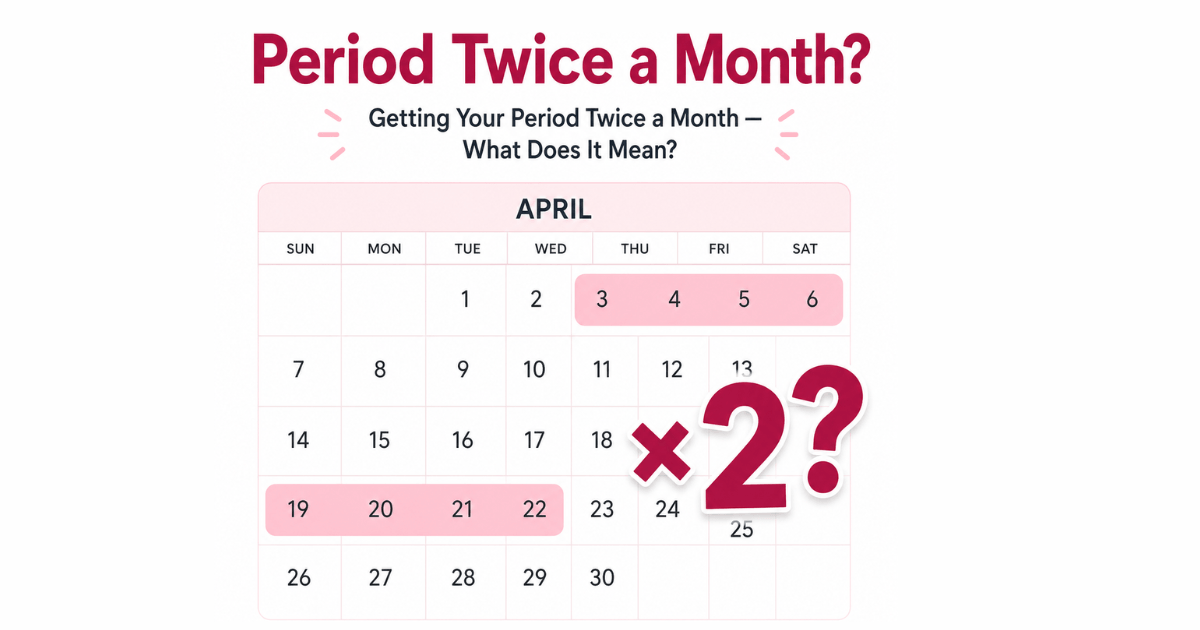
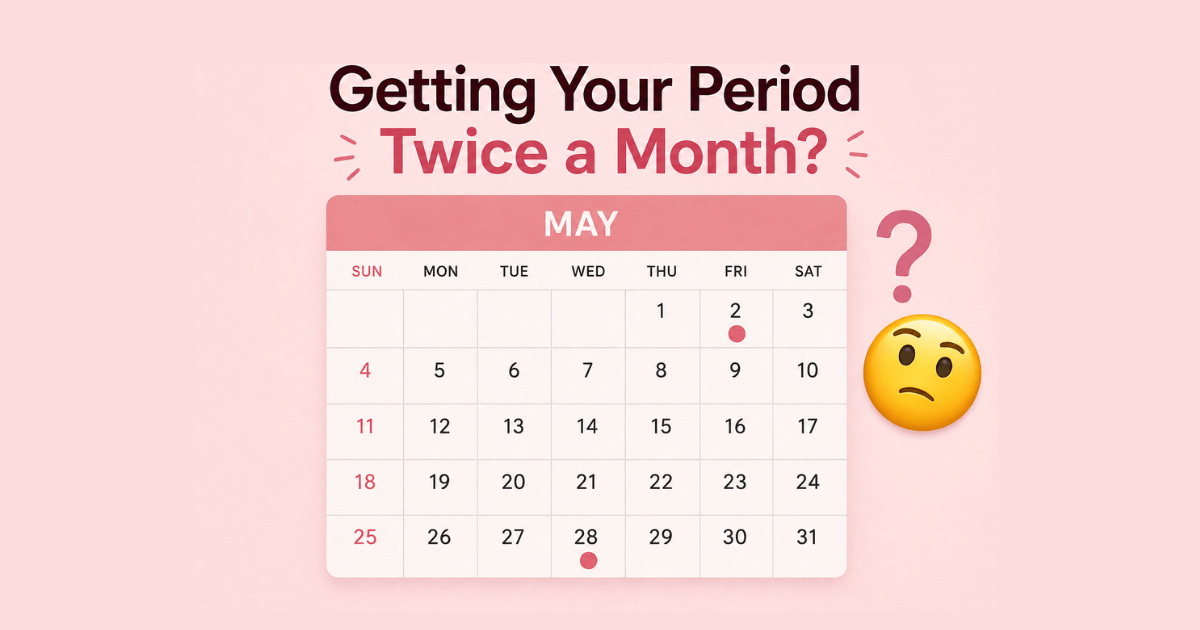
You just had your period — and now it seems like it's back again. Two bleeds in the same calendar month can feel alarming. Sometimes it's completely normal (short cycles are real). Other times it's your body signalling a hormonal shift, a structural issue, or something that deserves a check-up.
The key question is whether you're seeing a true second period, ovulation spotting, or mid-cycle bleeding — because the cause and what you should do about it differs significantly between them.
Two bleeds per calendar month is normal if you have a naturally short cycle (21–24 days). It becomes a concern if your cycles were previously longer and have recently shortened, if the second bleed is heavy, or if this pattern persists over several months. The most common causes are short cycle length, ovulation spotting, hormonal imbalance, and perimenopause.
Before investigating a cause, it helps to identify exactly what kind of bleeding you're experiencing. A true second period and mid-cycle spotting look different, feel different, and have different explanations.
If what you experienced matches the spotting column, scroll to causes 1–3 below — ovulation-related bleeding, hormonal contraception, or a cervical issue are the most likely explanations. If it matches the period column, all nine causes apply.
A normal cycle can be as short as 21 days. If your cycle runs 21–24 days, it is mathematically possible — and completely normal — to have your period arrive twice within the same calendar month. A period starting on the 5th of a month with a 21-day cycle will return around the 26th. This is one cycle, not two. The only way to confirm this is to track your actual cycle length rather than counting by calendar month.
Around 30% of women experience light spotting at ovulation — mid-cycle, typically 10–16 days before the next expected period. This is caused by the brief, sharp drop in oestrogen that follows the LH surge just before ovulation. The drop temporarily destabilises the uterine lining, causing a day or two of light pink or brown spotting. It is harmless and, in fact, a useful fertility sign — spotting mid-cycle usually means you are ovulating. It can easily be mistaken for a light second period if you are not tracking carefully.
Progesterone is responsible for stabilising the uterine lining during the second half of your cycle. When progesterone levels are lower than usual — due to anovulatory cycles, luteal phase defects, or high stress — the lining can become unstable and shed partially before your expected period date. This creates breakthrough bleeding mid-cycle that can be heavy enough to feel like a second period. An oestrogen surge that is not followed by a matching progesterone rise (common in perimenopause and PCOS) produces the same effect.
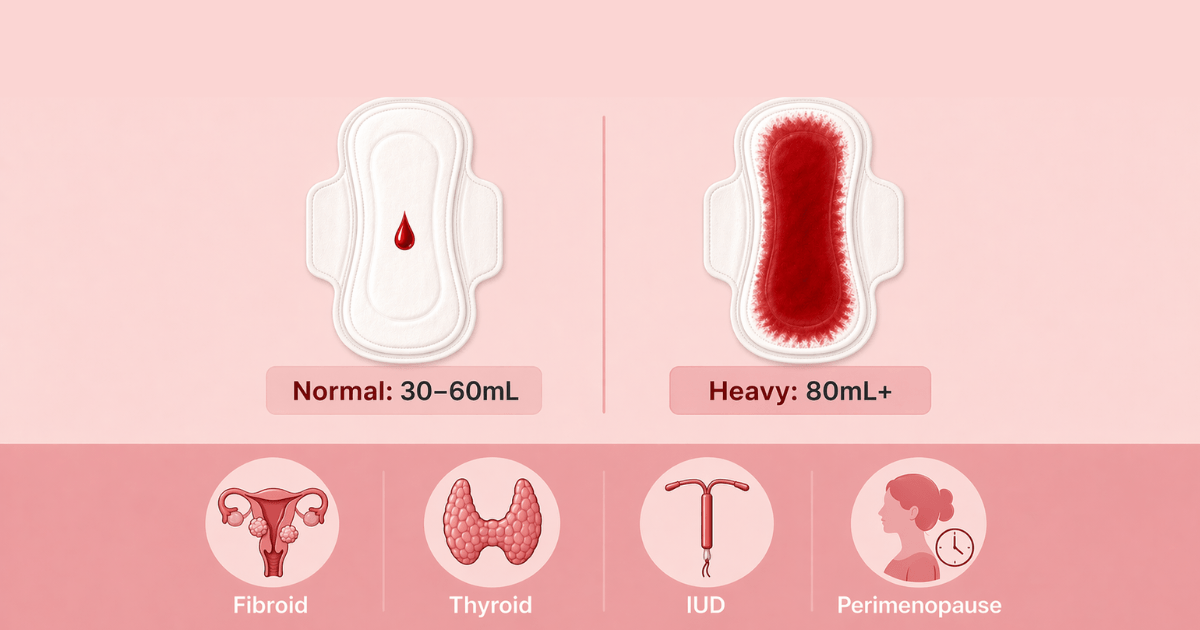
Uterine polyps (small, benign growths on the endometrial lining) and submucosal fibroids (fibroids that press into the uterine cavity) both cause irregular bleeding that can occur between cycles. The bleeding is often unpredictable in timing, may be heavier than a normal period, and can be accompanied by pelvic pressure or cramping. Polyps affect an estimated 10–24% of women of reproductive age and are a leading cause of intermenstrual (between-period) bleeding. Diagnosis is via transvaginal ultrasound or hysteroscopy.
The thyroid regulates metabolic rate and works in close communication with the hypothalamic-pituitary-ovarian axis that controls your cycle. Both an underactive thyroid (hypothyroidism) and an overactive thyroid (hyperthyroidism) can shorten cycle intervals, increase flow, and cause irregular or inter-menstrual bleeding. Thyroid disorders affect approximately 1 in 8 women, making them one of the most common overlooked causes of cycle changes. A simple TSH blood test can rule this out.
In the years leading up to menopause (average onset age 47, but can begin in the early 40s), oestrogen levels fluctuate erratically. Cycles can shorten considerably — some women go from 28-day cycles to 18-day cycles within months. This creates the experience of having periods two or three times in a single month. Other perimenopausal signs include hot flushes, night sweats, sleep disruption, and mood changes. A rising FSH level on a day 2–4 blood test is the most reliable early indicator.
Starting a new hormonal contraceptive — particularly the progestogen-only pill (mini-pill), the contraceptive implant, or a hormonal IUD — commonly causes irregular bleeding in the first 3–6 months, including what can feel like multiple periods per month. The hormones are adjusting the uterine lining, and breakthrough bleeding is a known and expected side effect during this adjustment period. If irregular bleeding persists beyond 6 months, a review with your prescribing doctor is warranted.
Acute physical or emotional stress can dramatically shorten a cycle by accelerating or disrupting ovulation. Elevated cortisol interferes with the hypothalamic-pituitary-ovarian axis — the signalling chain that times ovulation. A single highly stressful event (illness, bereavement, major travel, extreme exercise) can cut a cycle short by 5–10 days, effectively producing two periods in one month. This is usually a one-off event and the cycle returns to its previous rhythm within 1–2 months.
Cervical ectropion (where the delicate inner lining of the cervix extends onto the outer surface) causes easy contact bleeding — often triggered by sex, a smear test, or tampon insertion. This can appear mid-cycle and be mistaken for a second period. Sexually transmitted infections such as chlamydia and gonorrhoea cause cervical inflammation that similarly produces irregular bleeding. Endometriosis — endometrial tissue growing outside the uterus — causes painful, irregular bleeding across the cycle in some women. Any new pattern of mid-cycle bleeding, especially after sex, should be evaluated by a doctor.
Not every instance of twice-monthly bleeding requires urgent attention, but some patterns always warrant investigation.
A typical workup for frequent periods includes:
Tracking your cycle dates, flow heaviness, and any associated symptoms in an app before your appointment gives your doctor measurably better data to work with — reducing the number of follow-up visits needed.
Track every bleed with Wamiga
Wamiga distinguishes spotting from periods, tracks cycle length over time, and flags unusual patterns — so you always know what's actually happening.
The 7 most common causes of irregular cycles and a clear guide on when to act.
Fibroids, adenomyosis, hormonal imbalance — the 9 causes of heavy periods explained clearly.
Learn to identify ovulation spotting, egg-white mucus, LH surge timing, and 4 more signs.
The guidance in this article is informed by reputable medical and public-health organizations: