1 in 7
Women have cycles short enough for period–ovulation overlap to be possible
Day 7
Earliest ovulation day in a 21-day cycle — often still within the period
5 days
How long sperm can survive — making period-sex pregnancy possible
In this article
- The direct answer
- Cycle-length overlap visual — which cycles are at risk
- 3 scenarios where it happens
- Pregnancy probability from period-day sex by cycle length
- Period bleeding vs ovulation bleeding — how to tell them apart
- How to detect ovulation during your period
- When to see a doctor
- Frequently asked questions
The idea that you cannot get pregnant "because you're on your period" is one of the most persistent — and consequential — myths in reproductive health. It is based on the assumption that all women have 28-day cycles and ovulate on day 14. In reality, cycle length varies enormously, and ovulation timing adjusts with it. For anyone with a short or unpredictable cycle, the period and the fertile window are not as separate as most people assume.
The Direct Answer
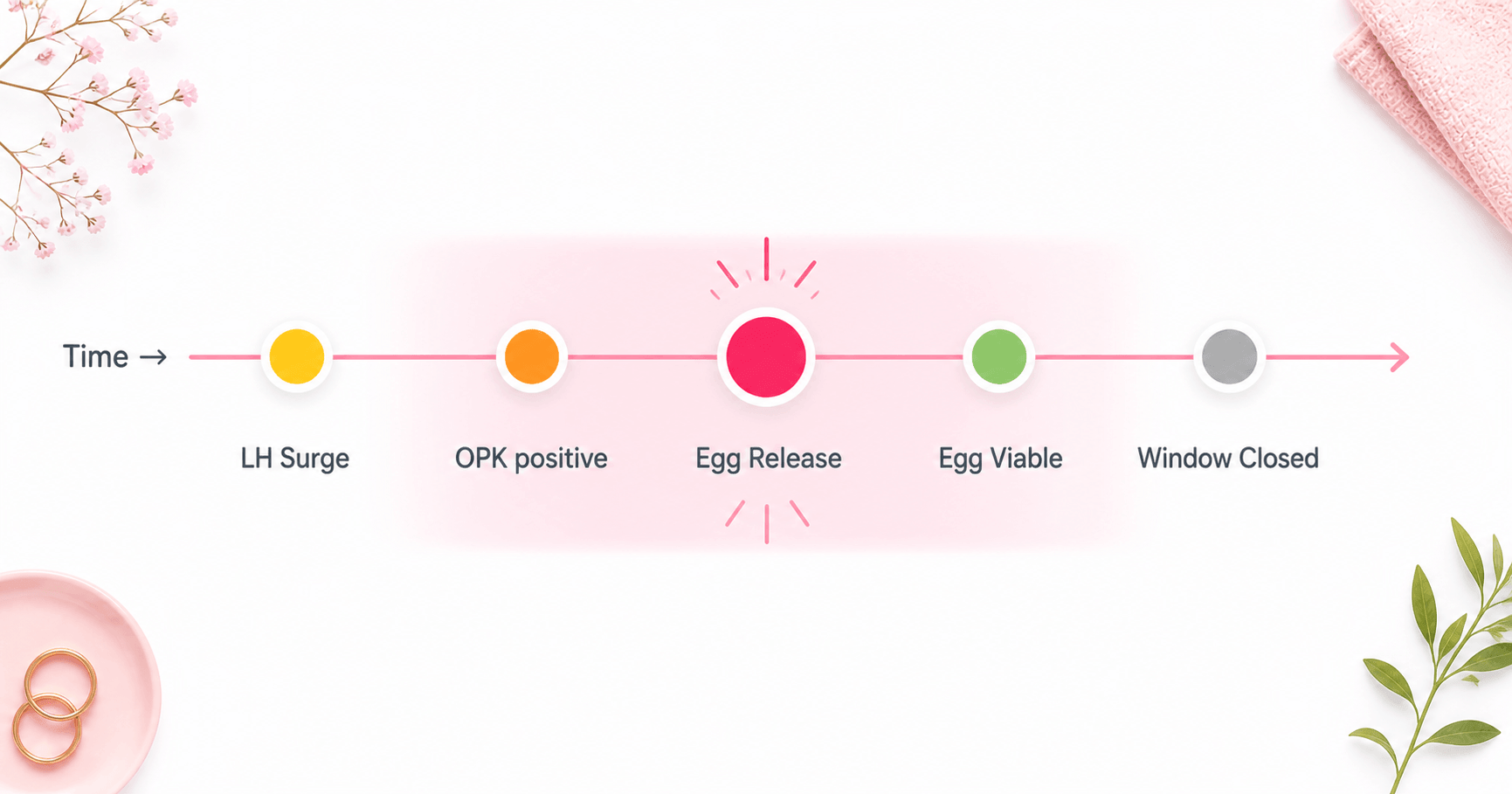
Yes — you can ovulate while you are still menstruating. This is not a myth or an edge case; it is a predictable mathematical outcome of certain cycle lengths.
Here is why: Ovulation always occurs approximately 14 days before the next period (the luteal phase is fixed at 12–14 days). So your ovulation day is determined by subtracting 14 from your cycle length — not by counting forward from day 1.
In a 21-day cycle: ovulation occurs around day 7. If the period lasts 5–7 days, the follicle is rupturing while the uterus is still shedding. In a 24-day cycle: ovulation on day 10 — still within range of a 7-day period. Even with a 28-day cycle and a 7-day period, the last day of the period and the start of the fertile window are right next to each other.
The pregnancy risk: Sperm deposited during the final days of a period can survive 3–5 days in the reproductive tract. If ovulation occurs on day 7 or 8, sperm from day 5 intercourse are still alive and can fertilise the egg. This is not theoretical — it is a documented route to unintended pregnancy.
Which Cycle Lengths Create an Overlap
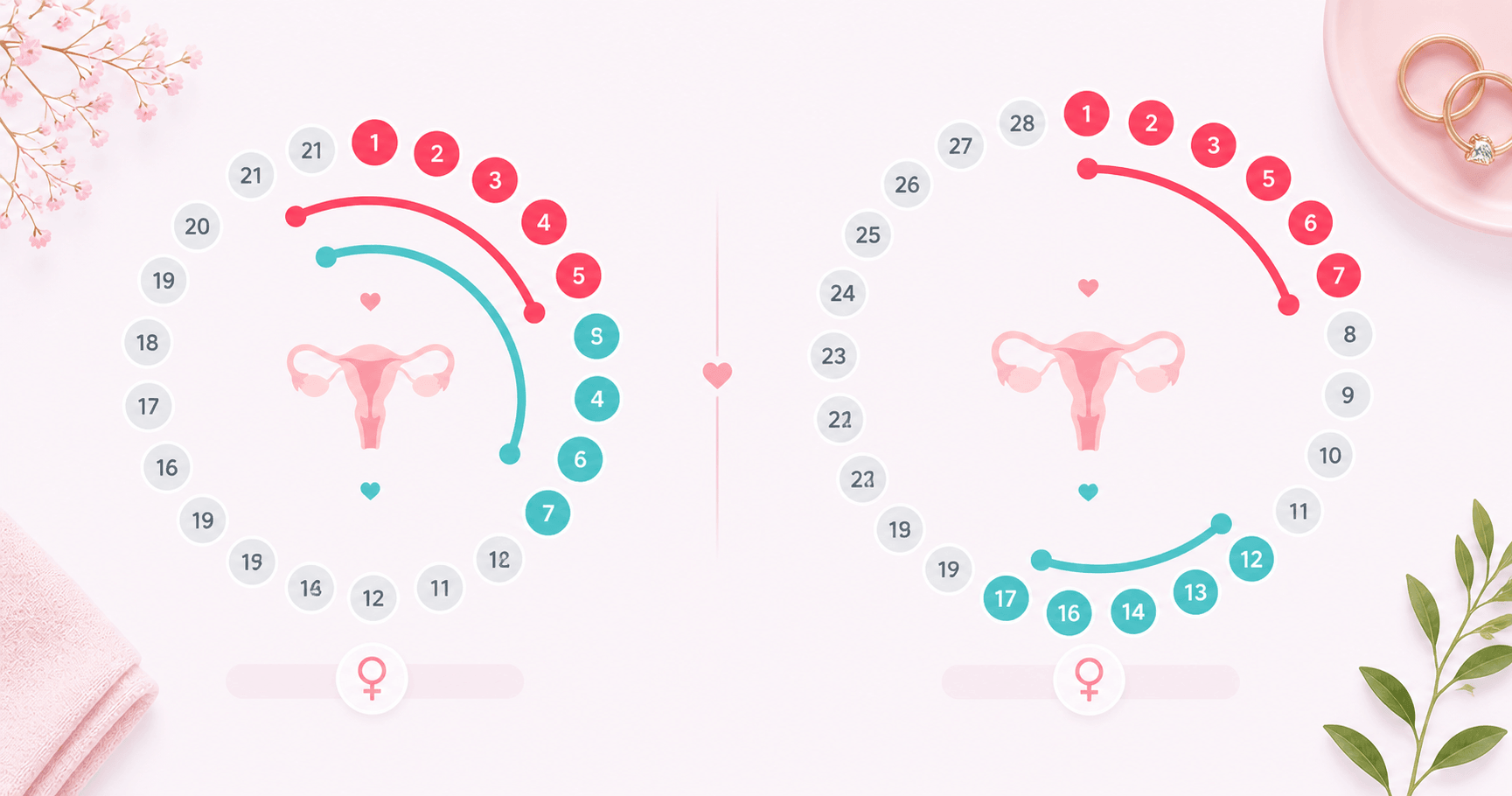
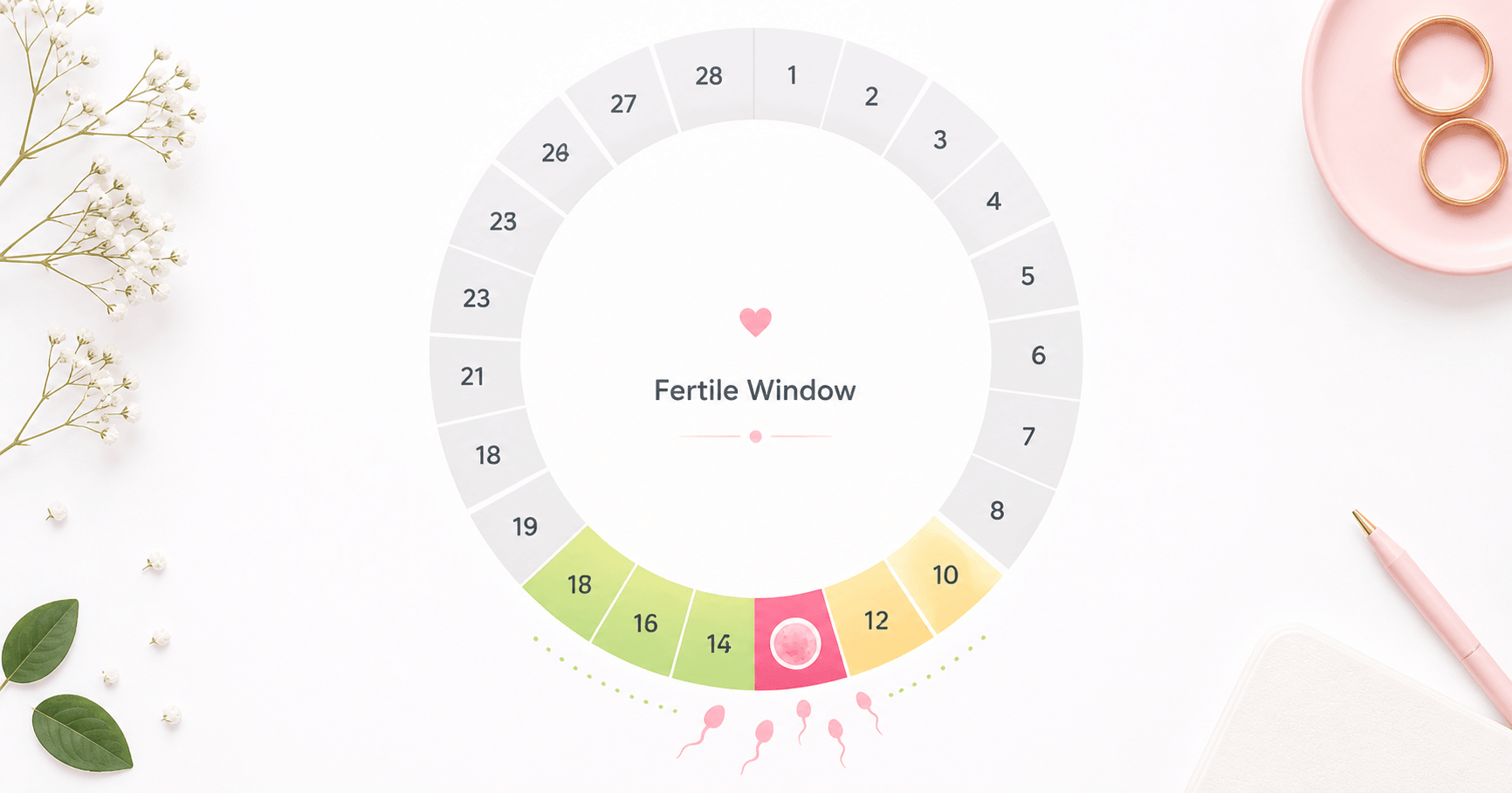
The coloured bars below show exactly where your period ends and where your fertile window begins for four common cycle lengths. Where the red and green bars are close — or touching — conception during your period is biologically possible.
Period vs fertile window — gap or overlap by cycle length
21-day cycle
High overlap risk
Period and fertile window overlap on days 2–7
Ovulation on day 7 means the fertile window opens on day 2 — while the period is heaviest. Sex on any day of this period carries conception risk.
24-day cycle
Moderate overlap risk
Fertile window starts day 5 — just before period ends
With a 7-day period, the last 2–3 days overlap with the fertile window. Sperm deposited on day 5–7 can survive to fertilise an egg released on day 10.
28-day cycle
Low risk — clear gap
Clear gap of 3–4 days between period end and fertile window start. Pregnancy from period-day sex is very unlikely in this cycle length.
35-day cycle
Very low risk
Very large gap — over 10 days between period end and fertile window. Conception from period sex is effectively impossible.
Menstrual phase
Fertile window
Ovulation day
Luteal phase
Safe gap
3 Scenarios Where Ovulation During a Period Happens
It is not just short cycles that create this overlap. Here are the three main routes to ovulating during menstruation.
1
Short menstrual cycle (21–24 days)
Most common cause
In cycles of 21–24 days, the follicular phase is very short — sometimes just 7–10 days. This means the dominant follicle matures and ovulates before or right as the period finishes. If you reliably have cycles under 25 days, this applies directly to you every single month.
How often this causes overlap
2
Irregular cycles with unpredictable early ovulation
Second most common
Women with irregular cycles — caused by PCOS, thyroid issues, stress, or perimenopause — can ovulate earlier than expected in any given cycle. A woman who normally ovulates on day 14 might ovulate on day 8 after a stressful month, pushing the fertile window into or near her period days. This unpredictability is what makes relying on cycle history alone dangerous.
How often this causes overlap
3
Ovulation bleeding mistaken for a period
Frequently misidentified
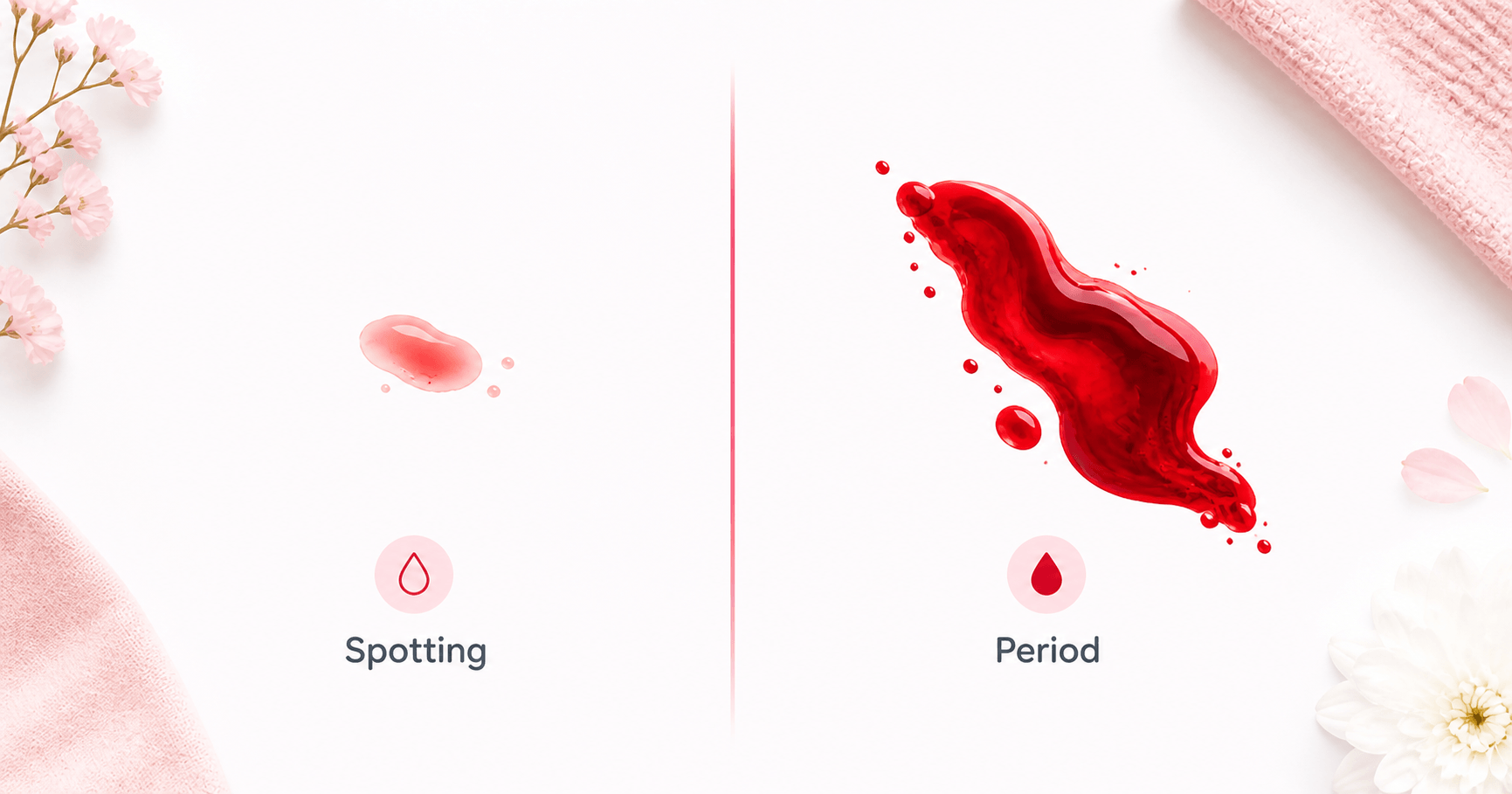
About 5% of women experience light mid-cycle spotting at ovulation — called ovulation bleeding. If this coincides with an early period, or if the woman has short cycles, the light pink or brown spotting is mistaken for menstruation. Sex "during the period" is actually sex on peak fertile days. This is a particularly common source of unexpected pregnancy.
How often this causes overlap confusion
Pregnancy Probability from Period-Day Sex by Cycle Length
The risk varies enormously based on your cycle length. The data below reflects the probability of pregnancy from unprotected sex on the last day of your period, based on typical period length of 5 days.
Note: These figures assume a 5-day period and typical ovulation timing. If you have irregular cycles, your actual risk on any given cycle can be higher or lower than your cycle-length average — which is why real-time tracking (LH strips, mucus) is always more reliable than calendar assumptions.
Period Bleeding vs Ovulation Bleeding — How to Tell Them Apart
One of the biggest sources of confusion is mistaking ovulation spotting for a light period — or vice versa. Here is how they differ across every key feature.
Feature
Period bleeding
Ovulation spotting
Colour
Bright red to dark brown; transitions over days
Light pink or pale brown; stays light throughout
Volume
Requires pad, tampon, or cup; increases day 2–3
Just a streak or dot; never fills a liner
Duration
3–7 days
1–2 days only
Cramping
Often significant — prostaglandin-driven
Mild or none; possible slight one-sided twinge
Cervical mucus
Blood masks mucus; non-fertile consistency
Clear, stretchy EWCM alongside or just before spotting
Cycle timing
Predictable start ~14 days after last ovulation
Mid-cycle — day 12–16 of a 28-day cycle
LH test result
Negative (LH is low at the start of a period)
Positive or just-positive — LH surge happening
How to Detect Ovulation During Your Period
If you have short or irregular cycles and want to know whether you are ovulating during your period, these methods give you real-time answers.
LH test strips from day 5
Start testing daily from day 5 of your cycle — earlier than usual guidance suggests. If you get a positive result while still bleeding, ovulation is imminent. Test at the same time each day; late morning gives the most sensitive results.
Cervical mucus alongside blood
Check for EWCM even when bleeding. Fertile mucus — clear, stretchy, slippery — can appear mixed with blood near the end of a period. If you see egg-white mucus while still spotting or bleeding lightly, your fertile window has opened.
BBT tracking across cycles
Chart your basal body temperature over 3+ cycles. If you see the luteal phase temperature rise occurring while your period-equivalent bleeding is still happening, you have confirmed early ovulation. BBT charts reveal your personal pattern across time.
Cycle tracking app with short-cycle support
Log your cycle data — including period length, LH results, and mucus — in Wamiga. After 2–3 cycles, the app will recognise your short-cycle pattern and flag your fertile window accurately, rather than defaulting to a day-14 ovulation assumption.
When to See a Doctor
Cycles consistently under 21 days
Cycles shorter than 21 days may indicate a short luteal phase, thyroid dysfunction, or perimenopause. Any cycle length under 21 days warrants a hormonal blood panel (FSH, LH, estradiol, progesterone, TSH).
Wildly variable cycle length
Cycles varying by more than 9 days from shortest to longest suggest anovulatory cycles or PCOS. If you cannot predict your period within a 5-day window, a GP review of hormonal status is appropriate.
Heavy bleeding mid-cycle
Light spotting around ovulation is normal. Heavy mid-cycle bleeding — requiring sanitary protection — is not ovulation spotting. It may indicate fibroids, polyps, cervical changes, or endometriosis and needs investigation.
Cycles getting progressively shorter
If your cycles have shortened from 28 to 24 to 21 days over recent years, this pattern can indicate declining ovarian reserve (diminishing egg supply) — especially in women over 35. An AMH (anti-Müllerian hormone) test can quantify ovarian reserve.
Frequently Asked Questions
Can you ovulate during your period?
Yes — in women with short cycles (21–24 days), ovulation can occur while menstrual bleeding is still happening. In a 21-day cycle, ovulation falls around day 7, which may coincide with the last days of the period. This is not a myth or a rare anomaly — it is a direct consequence of cycle mathematics and affects roughly 1 in 7 women.
Can you get pregnant if you have sex during your period?
Yes, if you have a short or irregular cycle. Sperm can survive in the reproductive tract for up to 5 days. Sex on day 5 of a period can produce sperm that are still alive when ovulation occurs on day 7, 8, or 9. The shorter your cycle, the higher the risk. Women with 28-day or longer cycles have very low pregnancy risk from period sex.
How do you know if you are ovulating during your period?
The most reliable method is using LH test strips from day 5 of your cycle. A positive result during bleeding confirms ovulation is imminent. Additional signs include clear stretchy cervical mucus mixed with blood, mild one-sided pelvic pain, and heightened libido. Cycle tracking apps that accommodate short cycles can also flag the pattern after 2–3 data cycles.
What cycle length makes period-ovulation overlap likely?
Any cycle of 24 days or fewer creates meaningful risk, especially if your period lasts 5+ days. A 21-day cycle almost guarantees overlap. Even irregular cycles that are normally 28 days can produce an overlap in months where stress or illness shifts ovulation earlier than usual.
Does ovulation bleeding look like a period?
No — they look quite different. Ovulation spotting is light pink or pale brown, involves only a small amount (a streak or dot), lasts 1–2 days, and produces no significant cramping. A period is redder, heavier, lasts 3–7 days, and typically involves cramping. The key diagnostic test: a positive LH strip alongside the bleeding = ovulation, not a period.
Sources & Further Reading
The guidance in this article is informed by reputable medical and public-health organizations: