85%
of healthy couples under 35 conceive within 12 months of trying with regular unprotected sex
33%
Maximum per-cycle pregnancy chance — achieved only by timing sex correctly in the fertile window
6 days
Length of the fertile window — sperm survive up to 5 days, egg lives 12–24 hours after release
In this article
Step 1: Time Sex to Your Fertile Window (The Biggest Factor)
If there is one thing that separates couples who conceive in 1–3 months from those who take 9–12 months, it is this: accurately timing sex to the days just before ovulation. Random sex throughout the month is far less effective than targeted sex in your 6-day fertile window.
The reason is biology. Once ovulation occurs, the egg survives for only 12–24 hours. Sperm, however, can survive in fertile cervical mucus for up to 5 days. This means the optimal strategy is to have sperm already waiting in the fallopian tube before the egg arrives — which means having sex in the days leading up to ovulation, not the day after.
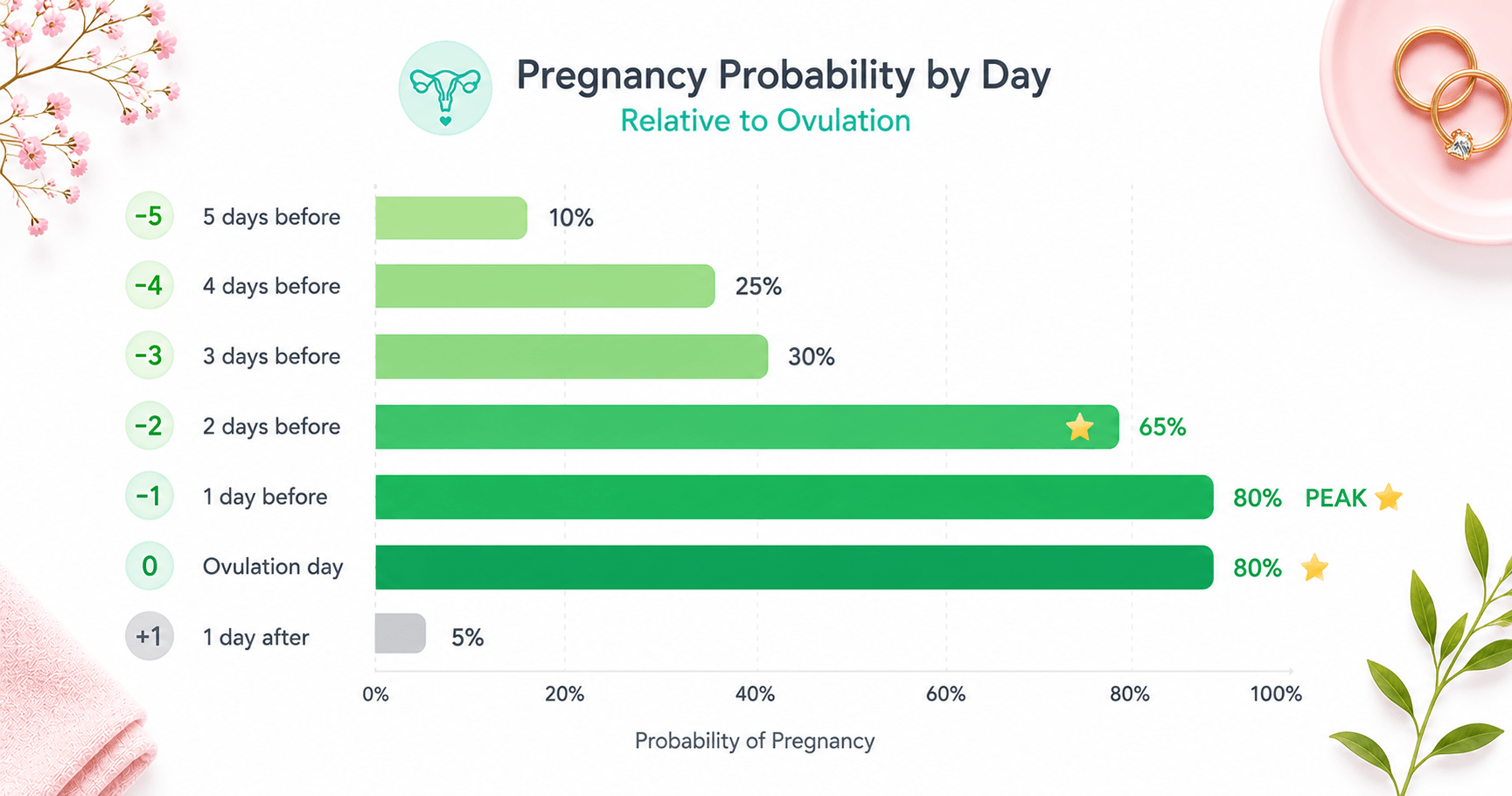
The Wilcox et al. study (1995, New England Journal of Medicine) measured pregnancy probability by the exact day of intercourse relative to ovulation. Here is what the data shows:
Pregnancy Probability by Day of Intercourse
Relative to confirmed ovulation day (Day 0) — Wilcox et al., NEJM 1995
5 days before
~10%
4 days before
~16%
3 days before
~14%
2 days before ⭐
~27%
1 day before ⭐
~33% — PEAK
Ovulation day ⭐
~33%
1 day after
<2%
The key insight: the day after ovulation, your chance drops to near zero. This is why people who have sex only when they feel they are ovulating often miss the window — by the time they notice ovulation signs, the egg may already be past its viable window.
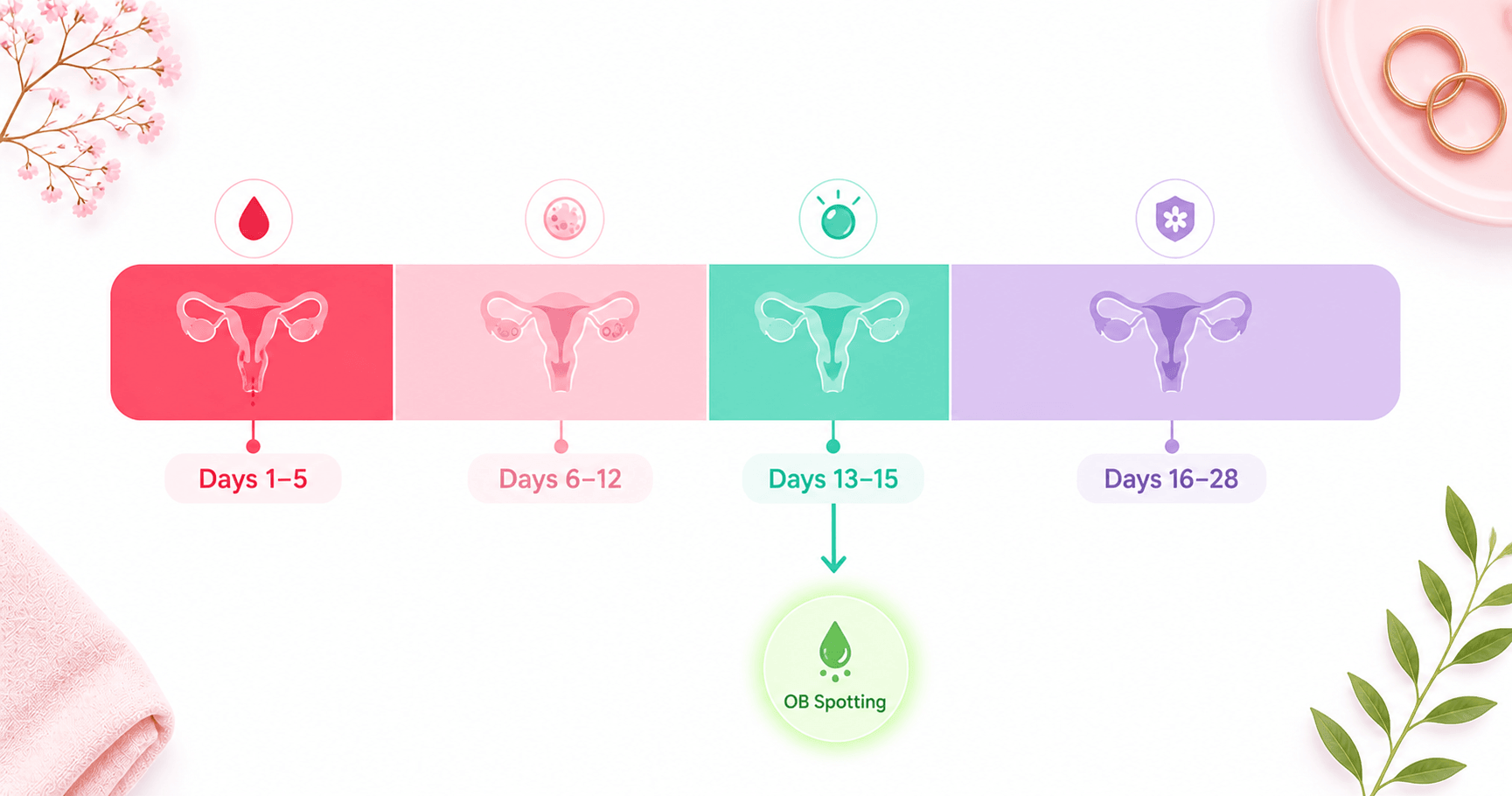
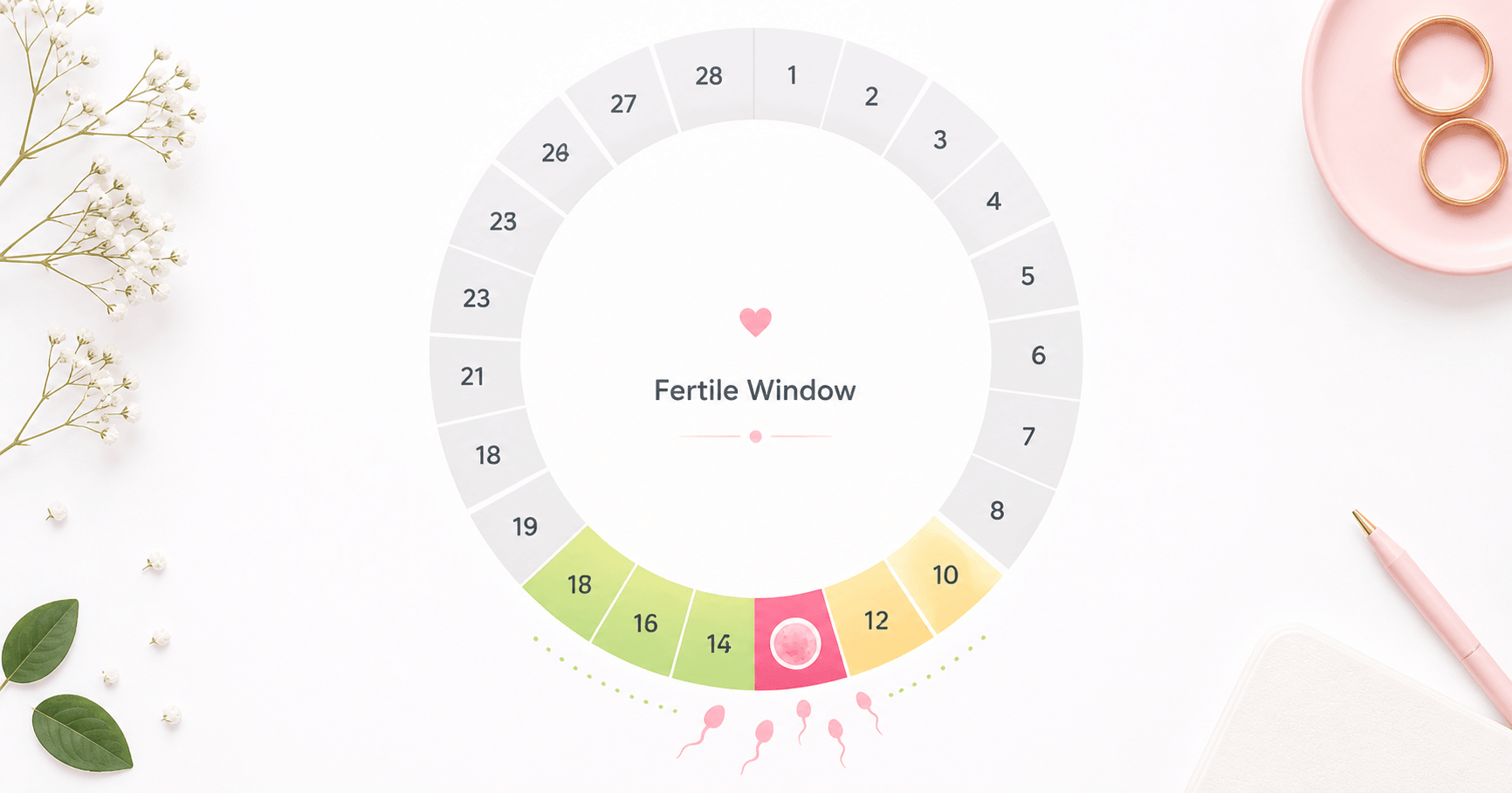
Your fertile window is the 5 days before ovulation plus ovulation day itself. Within that window, the last 2–3 days give you the highest pregnancy probability. To find your window, you need to detect ovulation before it happens — which brings us to Step 2.
Step 2: Detect Ovulation Accurately
Knowing your fertile window only helps if you can actually find it. Calendar counting alone is unreliable — even in women with regular 28-day cycles, ovulation can shift by several days. Here are the four methods, ranked by accuracy and ease:
Ovulation Predictor Kits (OPK)
Detect the LH surge that triggers ovulation 24–36 hours before the egg is released. Start testing from Day 9–10 of your cycle (earlier for short cycles). A strong positive = your most fertile 2-day window is open right now.
Accuracy: ~99% for LH detectionCervical Mucus (EWCM)
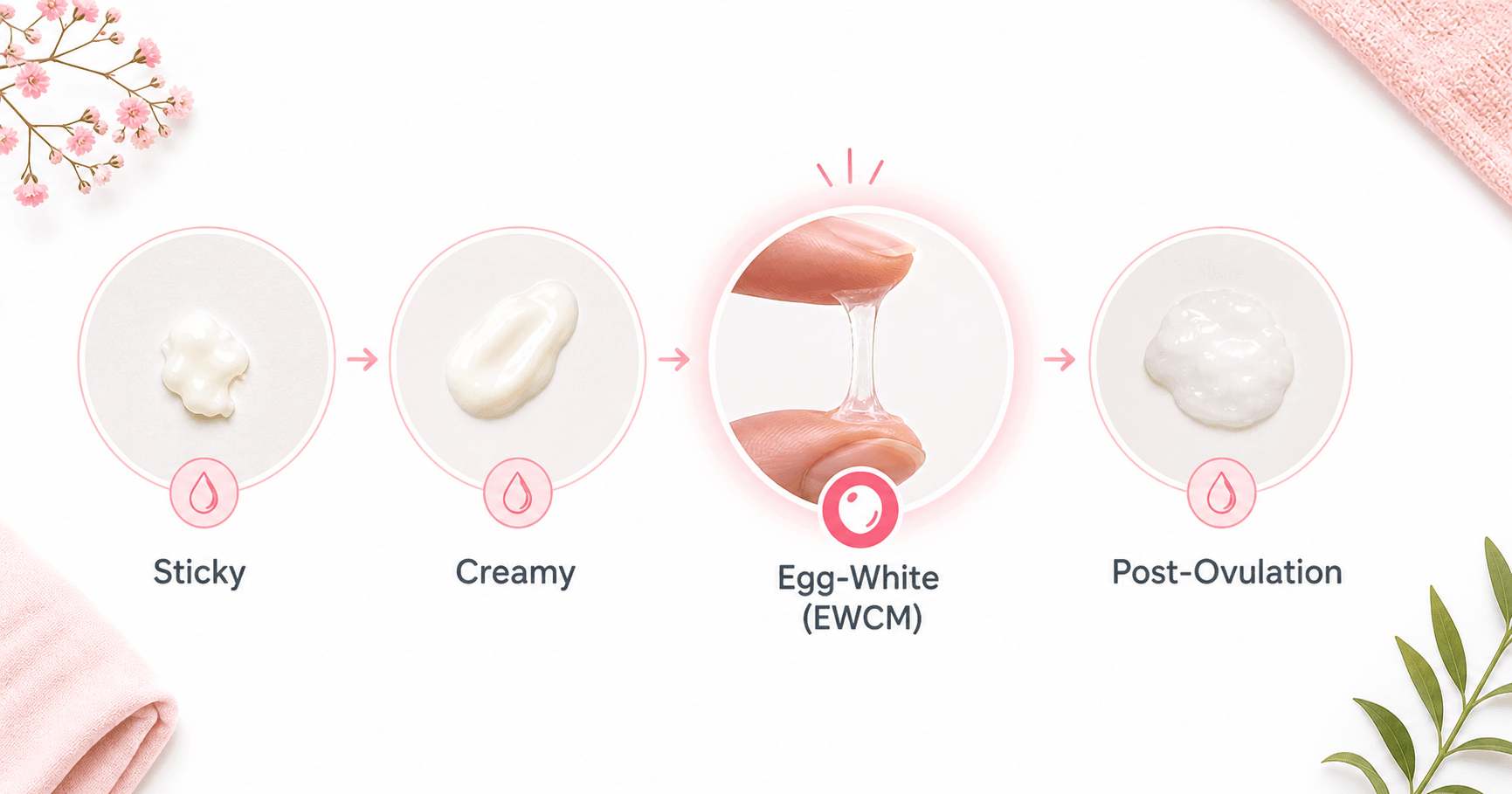
As ovulation approaches, discharge becomes clear, stretchy, and slippery — like raw egg whites. This egg-white cervical mucus (EWCM) is the body's natural signal that the fertile window is open. Free, zero equipment required, available daily.
Accuracy: ~75–80% when correctly identifiedBasal Body Temperature (BBT)
Your resting temperature rises by 0.2–0.5°C after ovulation due to progesterone. BBT confirms ovulation already happened — making it most useful for retrospectively mapping your cycle over 2–3 months to predict future ovulation.
Confirms ovulation — best for cycle mappingPeriod Tracker App + AI
A good period tracker combines your cycle history, symptoms, mucus, and BBT to predict your personal fertile window. Wamiga's AI learns your individual cycle patterns and alerts you when your window opens — removing the guesswork entirely.
Accuracy improves with more data loggedBest combination: Use OPK strips to detect your LH surge, and check cervical mucus daily as a secondary confirmation. When the OPK turns positive and you have EWCM, have sex that day and the next — you are in your peak window. See What Does Ovulation Discharge Look Like? for the full cervical mucus guide.
Step 3: How Often to Have Sex
You do not need to have sex constantly — you need to have sex strategically. Research is clear on this:
- During your fertile window: Have sex every 1–2 days. This keeps a fresh supply of sperm in the reproductive tract at all times during the window. Daily sex also works and is not harmful to sperm quality in healthy men.
- Outside your fertile window: Frequency barely matters for that cycle's pregnancy chances. Regular sex (2–3 times per week) year-round is enough to cover any unexpected early ovulation and supports relationship health.
- Abstaining for days before the window: Not necessary. Sperm quality is generally fine with daily ejaculation in men with normal semen parameters. Extended abstinence (more than 5 days) can actually reduce motility.
20%
chance per cycle in healthy couples age 25–30
57%
conceive within 3 months
75%
conceive within 6 months
85%
conceive within 12 months
These numbers are for couples who are consistently having sex during the fertile window. If you are having sex throughout the month without targeting the fertile window, your effective per-cycle odds are much lower — sometimes as low as 3–5% per month.
Step 4: Lifestyle Changes That Genuinely Help
After timing, lifestyle is the next most impactful lever. These are ranked by the strength of evidence:
🍃 Start folic acid now
Strong evidence
400 mcg/day (5 mg if higher risk) reduces neural tube defect risk by up to 70%. Start at least 1 month before trying — ideally 3 months before. This is the one supplement with universal NHS/WHO endorsement.
🚭 Stop smoking
Strong evidence
Smoking reduces female fertility by up to 40% and significantly lowers sperm quality. It also increases miscarriage risk. Quitting is the single most impactful lifestyle change for both partners.
⚖️ Reach a healthy BMI (18.5–25)
Strong evidence
Both underweight (BMI <18.5) and overweight (BMI >25) are associated with ovulation disorders. Women with a BMI between 18.5 and 25 have the highest conception rates. Even a 5–10% weight change in either direction can restore regular ovulation.
🍺 Limit alcohol
Good evidence
Studies link more than 4 units/week with reduced fertility in women and reduced sperm quality in men. The safest advice when trying to conceive: aim for no more than 1–2 units occasionally, or avoid entirely. No alcohol in confirmed pregnancy.
☕ Keep caffeine under 200 mg/day
Good evidence
200 mg is roughly one strong coffee. Evidence links high caffeine intake (>300 mg/day) with slightly reduced fertility and increased early miscarriage risk. You do not need to eliminate coffee — just moderate it. 200 mg/day is considered safe.
🧘 Manage stress
Moderate evidence
Severe chronic stress can disrupt the hypothalamic-pituitary-ovarian axis, delaying or suppressing ovulation. Moderate everyday stress does not reliably reduce fertility. Mindfulness, yoga, and exercise are reasonable to pursue for overall wellbeing.
💊 Review medications and supplements
Good evidence
Some medications affect fertility: NSAIDs taken around ovulation may impair egg release; some antidepressants, antipsychotics, and blood pressure drugs can affect prolactin and ovulation. Review all medications with your doctor before trying to conceive.
Wamiga tracks your entire fertile window — combining cycle history, mucus, BBT, and OPK results into a single fertility score. It alerts you when you enter your peak window so you never miss the optimal days. Try Wamiga free →
How Age Affects Your Monthly Chances
Age is the most significant biological factor in conception speed — not because fertility falls off a cliff, but because egg quality and quantity decline gradually through the 30s and more steeply after 38. Here are approximate monthly fecundity rates (probability of conceiving in a given month) by age group:
Age 20–24
~25% per cycle
Age 25–29
~22% per cycle
Age 30–34
~18% per cycle
Age 35–37
~12% per cycle
Age 38–40
~7% per cycle
Age 40–42
~4–5% per cycle
If you are in your mid-to-late 30s, accurate timing becomes even more critical — a 38-year-old who times sex perfectly has better monthly odds than a 35-year-old who misses the fertile window entirely. Age is not a reason to panic, but it is a reason to be more precise and not wait too long before seeking medical advice.
Myths vs What Actually Works
There is an enormous amount of fertility misinformation online. Here is the evidence on the most common claims:
| Common Myth | What the Evidence Actually Says |
|---|---|
| ✗You ovulate on Day 14 | ✓Only in a textbook 28-day cycle. Most women ovulate anywhere from Day 10 to Day 21. Track — don't assume. |
| ✗Lying with your legs up after sex helps | ✓Sperm reach the cervix within minutes regardless of gravity. No RCT evidence this increases natural conception rates. |
| ✗Orgasm improves conception chances | ✓The "upsuck" theory is disputed. No strong evidence female orgasm improves natural conception rates, though it doesn't hurt. |
| ✗Abstaining for a week maximises sperm | ✓Abstaining more than 5 days can reduce sperm motility. Every 1–2 days during the fertile window is optimal. |
| ✗Certain sexual positions help | ✓No evidence any position improves natural conception rates. Sperm are not affected by position once ejaculated. |
| ✗Pineapple core (bromelain) helps implantation | ✓No human studies support this claim. Anecdotal only. Eating pineapple is fine, but don't rely on it. |
| ✗Just relax and it will happen | ✓Mild lifestyle stress does not reliably cause infertility. If not conceiving after 12 months, get evaluated — don't just wait. |
When to See a Fertility Doctor
Trying to conceive is emotionally taxing, and knowing when to escalate to a specialist is important. The standard guidance from NICE (UK), ACOG (US), and WHO:
Under 35: After 12 Months
See your GP or a fertility specialist if you have been trying with regular unprotected sex (every 2–3 days) for 12 months without conceiving. Both partners should be evaluated — male factor causes account for ~40% of infertility.
Over 35: After 6 Months
If you are 35 or older, see a specialist after 6 months. If you are 40 or older, see one immediately — don't wait. Time matters more at this age and earlier intervention preserves more options.
Known Risk Factors — See Early
See a doctor now (don't wait 6–12 months) if you have: irregular or absent periods, diagnosed PCOS or endometriosis, prior pelvic surgery or STI, recurrent miscarriage, or a partner with known fertility issues.
Male Factor — Don't Overlook
Male factor infertility contributes to ~50% of cases. A semen analysis is quick, non-invasive, and should be one of the first tests — not an afterthought. Both partners should be assessed simultaneously.
Starting the investigation early does not mean you are infertile. It means you get answers faster and have more options available to you. Most fertility investigations start with simple blood tests and a semen analysis — both can be arranged through your GP.
Sources & Further Reading
The guidance in this article is informed by reputable medical and public-health organizations:
Frequently Asked Questions
How quickly can you get pregnant after trying?
For healthy couples under 35, about 57% conceive within 3 months, 75% within 6 months, and 85% within 12 months of trying. The biggest variable is how accurately you are timing sex to your fertile window — missing the window by just one or two days can significantly reduce your per-cycle odds.
What is the fastest way to get pregnant?
The single most impactful step is timing unprotected sex to the 2–3 days just before ovulation. Use ovulation predictor kits (OPKs) to detect your LH surge, which triggers ovulation 24–36 hours later. Having sex when you get a positive OPK — and the day before — gives the highest per-cycle pregnancy probability of up to 33%.
Does lying down after sex help you get pregnant?
Evidence for natural conception is limited. Sperm begin swimming toward the egg almost immediately after ejaculation and do not require gravity assistance. A 2009 study found a modest benefit in IUI (not natural conception). It is not harmful to rest briefly, but there is no confirmed benefit for natural conception.
How many times a week should you have sex to get pregnant?
During your fertile window (the 5 days before and the day of ovulation), have sex every 1–2 days. This keeps sperm available in the reproductive tract throughout the window. Outside the fertile window, frequency has little impact on your cycle's pregnancy chances, though regular sex (2–3 times/week) throughout the month keeps things on track.
How long should you try before seeing a doctor about fertility?
See your doctor after 12 months of regular unprotected sex if you are under 35, or after 6 months if you are 35 or older. See a doctor sooner if you have irregular or absent periods, diagnosed PCOS or endometriosis, prior pelvic surgery, recurrent miscarriage, or a partner with known fertility issues.