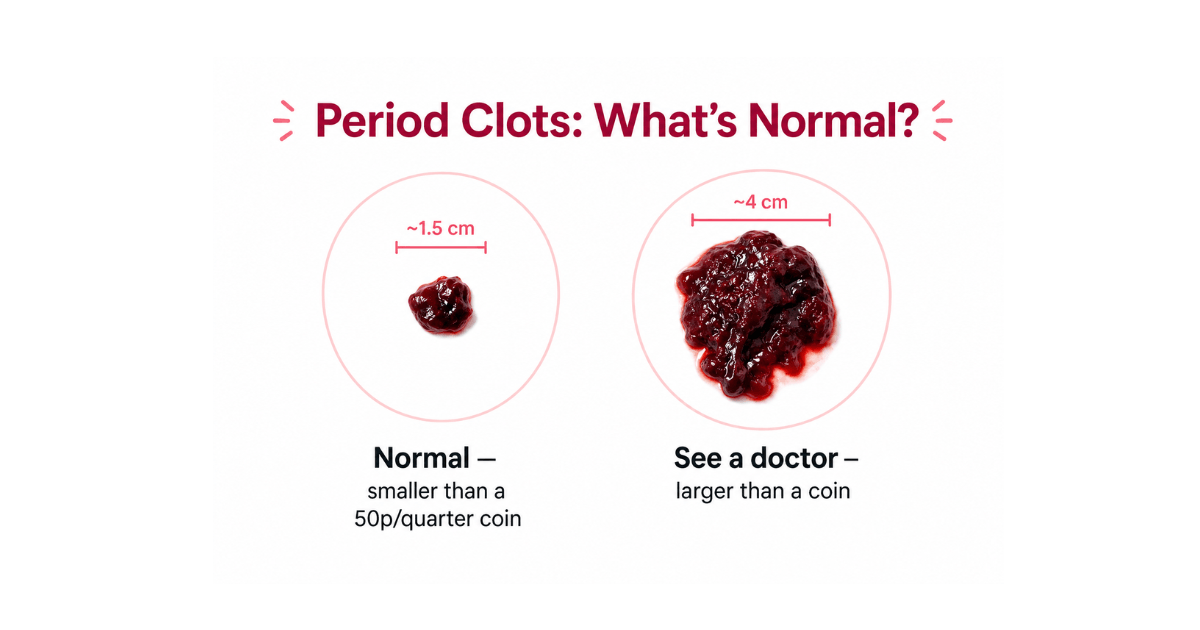
Blood Clots During Period: When Are They Normal?
A simple size guide — and the 5 conditions that cause abnormally large clots.
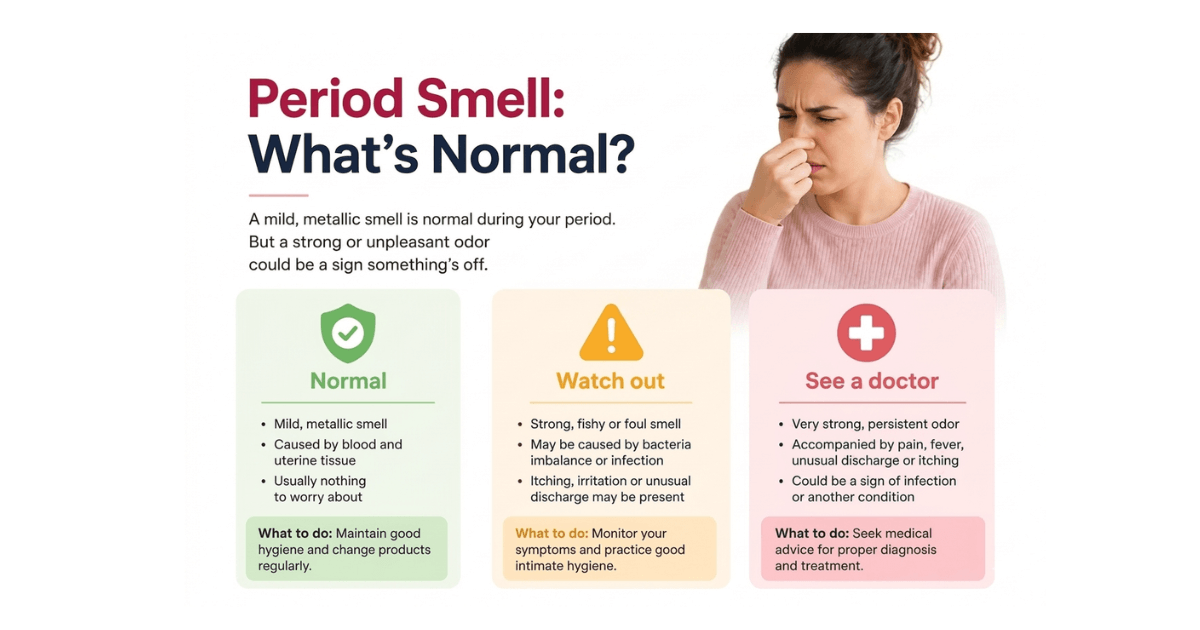
Period smell is one of those topics almost nobody talks about — but most people wonder about. The truth is: some smell is completely normal, because of what period blood is made of. But certain smells are your body's way of flagging an infection or something that needs attention.
This guide breaks down every period smell you might notice, explains the biology behind each one, and tells you clearly what's normal and what warrants a doctor visit.
A metallic or mildly musky smell is normal and is caused by iron in haemoglobin oxidising in air and a temporary rise in vaginal pH. A fishy smell — especially one that's stronger after sex or during your period — usually indicates bacterial vaginosis (BV), which is treatable. A rotting or extremely foul smell can mean a forgotten tampon or a more serious infection.
Period blood isn't just blood. It's a mixture of blood, shed uterine lining (endometrial tissue), cervical mucus, and vaginal secretions. Each component contributes to the smell, and a few biological processes change things further once blood leaves the body.
Iron and haemoglobin: Red blood cells contain haemoglobin, an iron-rich protein. When blood contacts oxygen in the air, the iron oxidises — the same reaction that makes cut metal smell metallic. This produces the characteristic copper/iron odour of period blood. It's purely chemical, not bacterial, and is completely normal.
Vaginal pH shift: Your healthy vaginal pH sits between 3.8 and 4.5 — acidic, maintained by Lactobacillus bacteria that produce lactic acid. Blood has a pH of around 7.4 (alkaline). During your period, menstrual flow temporarily raises vaginal pH, which slightly changes the microbial environment and can produce a faint musky note. This is also normal and resolves once your period ends.
Use this as a reference guide. Match the smell you're noticing to the description below.
BV is the most common vaginal infection in women aged 15–44, estimated to affect around 21 million women in the US annually. It occurs when the Lactobacillus bacteria that normally dominate the vaginal microbiome are displaced by anaerobic bacteria — primarily Gardnerella vaginalis, Prevotella, and Mobiluncus species.
These bacteria produce volatile amines — particularly trimethylamine, putrescine, and cadaverine — which are responsible for the characteristic fishy odour. The smell intensifies in alkaline conditions, which is why it's strongest during a period (blood pH ~7.4) or after sex (semen pH ~7.2–8). BV is not a sexually transmitted infection, though new or multiple sexual partners, douching, and smoking increase the risk. Treatment is metronidazole or clindamycin (oral or vaginal gel), which typically resolves symptoms within a week.
Trichomoniasis is caused by the protozoan parasite Trichomonas vaginalis and is the most common non-viral sexually transmitted infection globally. The CDC estimates around 3.7 million people in the US are infected at any given time, though approximately 70% have no symptoms at all.
When symptoms do occur, they include frothy, yellow-green or grey discharge, a strong unpleasant odour (often described as musty or fishy but distinct from BV), itching, burning, and redness. Diagnosis is confirmed via a NAAT test or wet mount microscopy. Treatment is a single oral dose of metronidazole or tinidazole — both partners need to be treated simultaneously.
A forgotten tampon, menstrual disc, or menstrual cup that is left in place too long creates an anaerobic environment in which bacteria multiply rapidly. Within 24–48 hours, the trapped blood and material begins to decompose, producing a very distinctive, strong rotting smell — qualitatively different from normal period odour or BV.
If you notice this smell and cannot recall when you last changed your menstrual product, check and remove it immediately. A retained tampon is also a risk factor for toxic shock syndrome (TSS) — a rare but potentially life-threatening condition caused by Staphylococcus aureus toxins. Signs of TSS include sudden high fever (above 38.9°C), rash resembling sunburn, vomiting, dizziness, and low blood pressure. If these appear, go to the ER immediately.
What you eat affects every bodily secretion, including vaginal fluid. Foods rich in volatile sulfur compounds — garlic, onions, broccoli, cauliflower, asparagus — are metabolised and partially excreted through sweat and bodily secretions. During your period, when flow is heavier and the external environment around the vulva is warmer and more humid, these dietary odours can be amplified.
Dehydration concentrates all bodily fluids and worsens odour. Drinking 2–2.5 litres of water daily during your period, reducing sulfurous foods, and limiting alcohol (which dehydrates and affects gut microbiome) can all meaningfully reduce odour intensity. Probiotic foods — yoghurt, kefir, fermented foods — support both gut and vaginal Lactobacillus populations.
The vulva has apocrine sweat glands — the same type found in the armpits — that respond to heat and physical activity. Exercise during your period, warm weather, or tight clothing traps moisture and creates conditions where normal period odour intensifies significantly. This is not a sign of infection — it's simply biology.
The most effective remedy is wear time: changing a pad or tampon every 4–6 hours rather than letting blood oxidise on the surface for longer. Old blood that has been sitting on a pad for 8+ hours will smell significantly stronger than fresh flow. Period underwear should be rinsed and washed after each use.
Most period odour is manageable with simple, consistent habits. Here's what is actually supported by evidence — and one thing that makes it significantly worse.
Go to the ER immediately if you notice an extremely foul or rotting smell alongside fever above 38.9°C, rash resembling sunburn, sudden dizziness, vomiting, or feeling faint. These are the warning signs of toxic shock syndrome (TSS), which is rare but progresses rapidly.
Track your cycle with Wamiga
Log daily discharge, flow, and symptoms. Spot patterns that help you and your doctor understand your body.
A simple size guide — and the 5 conditions that cause abnormally large clots.
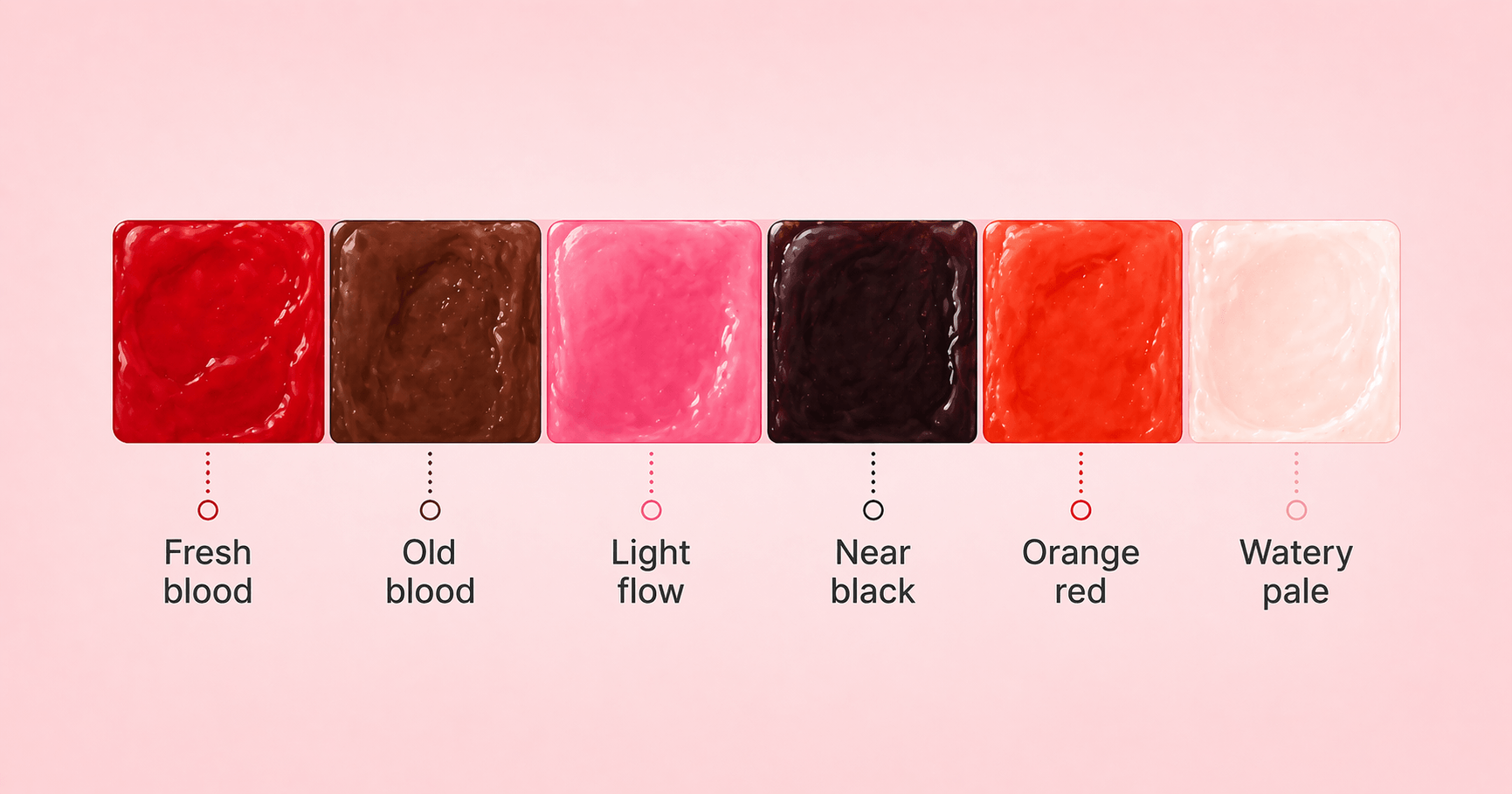
Bright red, dark brown, black, pink — every colour explained with when it's normal and when to act.
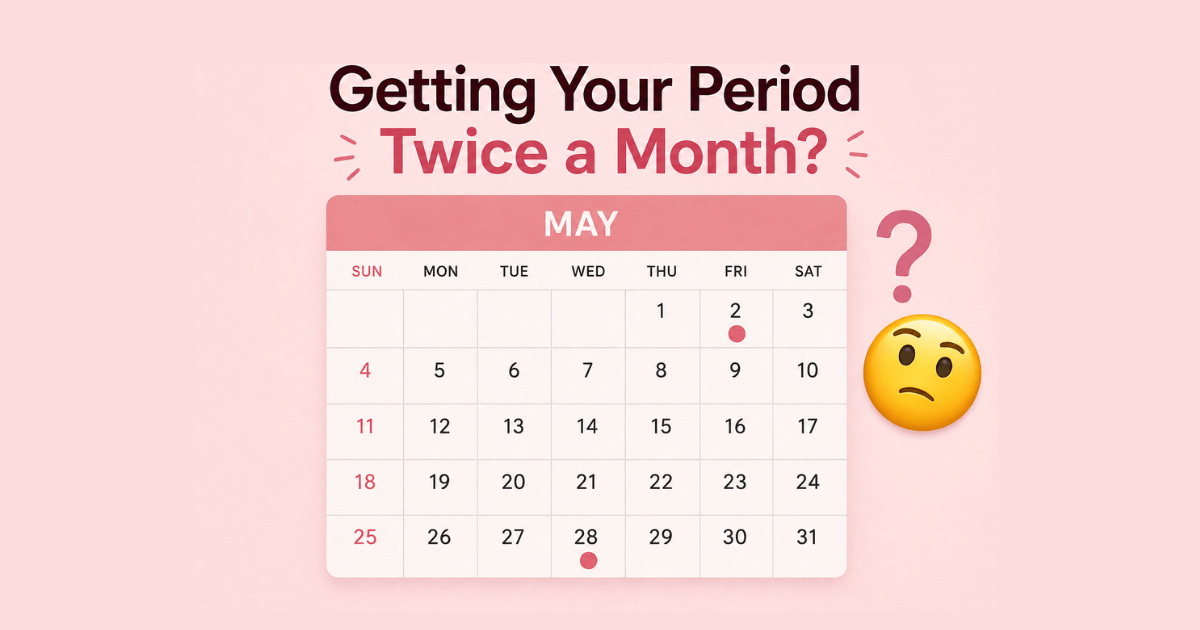
Irregular periods affect 1 in 5 women. The 7 most common causes and when to act.
The guidance in this article is informed by reputable medical and public-health organizations: